
28 October 2026
Roofers In Sanderstead, Selsdon And New Addington: Faults And Costs By House Type
Roofers in Sanderstead, Selsdon and New Addington on what goes wrong with interwar detached houses, garden village semis and estate roofs up on the plateau, with 2026 prices.
Sanderstead, Selsdon and New Addington sit next to each other on the chalk plateau south-east of central Croydon, and their housing could hardly be more different. Sanderstead is mostly big interwar detached houses on wide plots. Selsdon is the garden village laid out after the Selsdon Park estate was sold in 1925, so it is a sea of hipped semis. New Addington is a planned estate that began with 1,023 houses before 1939 and gained another 1,412 by 1968. If you are looking for roofers in Sanderstead, Selsdon and New Addington, the house you own matters more than the postcode. Each type fails in its own predictable places and costs a different amount to put right. All three are also high and windy: Selsdon is around 150 metres above sea level, and the woods at Sanderstead Plantation rise to roughly 175. Below we go through the house types one at a time, then the weather, the trees, the council and the prices.
Roofers in Sanderstead, Selsdon and New Addington: one plateau, three kinds of house
Geologically, this corner of the borough sits on the North Downs dip slope. The chalk tilts gently north towards London, so the ground climbs as you head south out of Croydon until it reaches the open farmland and green belt along the Surrey border. On the tops the chalk is covered with clay-with-flints. Gardeners know it as heavy soil full of stones. Roofers know it for something else: a ridge with nothing higher between it and the south-westerly wind.
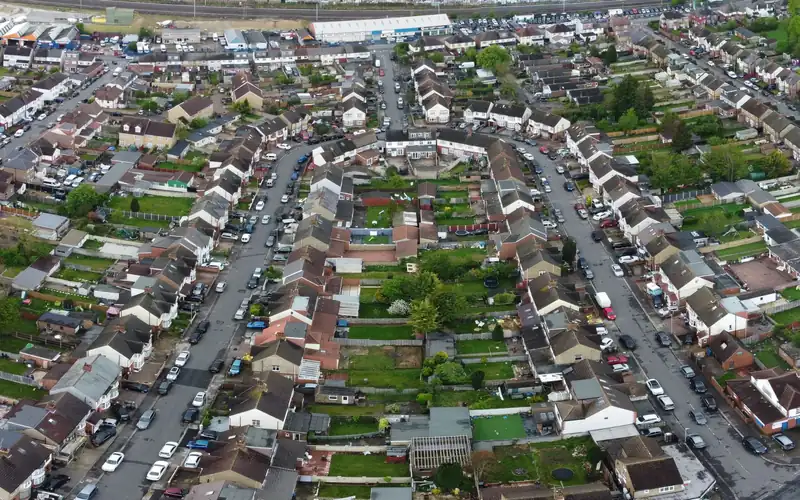
The houses arrived in three waves. Sanderstead filled up between the wars, once the Southern Railway electrified the line and a daily trip into town became easy. Selsdon grew alongside it as a garden village, on tighter plots. New Addington was different again: a housing scheme dropped onto Fisher’s Farm in open country, with no railway station at all (the tram only arrived in 2000). That gives a roofer covering Croydon three different jobs within a couple of miles, and it is why the first thing we ask on the phone is what sort of house you have, not where it is.
Sanderstead’s interwar detached houses: big hips, deep eaves
The typical Sanderstead house on Limpsfield Road, Mitchley Hill or Purley Downs Road is a 1920s or 1930s detached house with a fully hipped roof, a projecting front gable or two, deep overhanging eaves and a chimney on at least one side. Plenty still have their original clay plain tiles. Many others were re-covered in concrete interlocking tiles somewhere between the 1960s and the 1990s. For the details that change by road, see our Sanderstead roofing page.
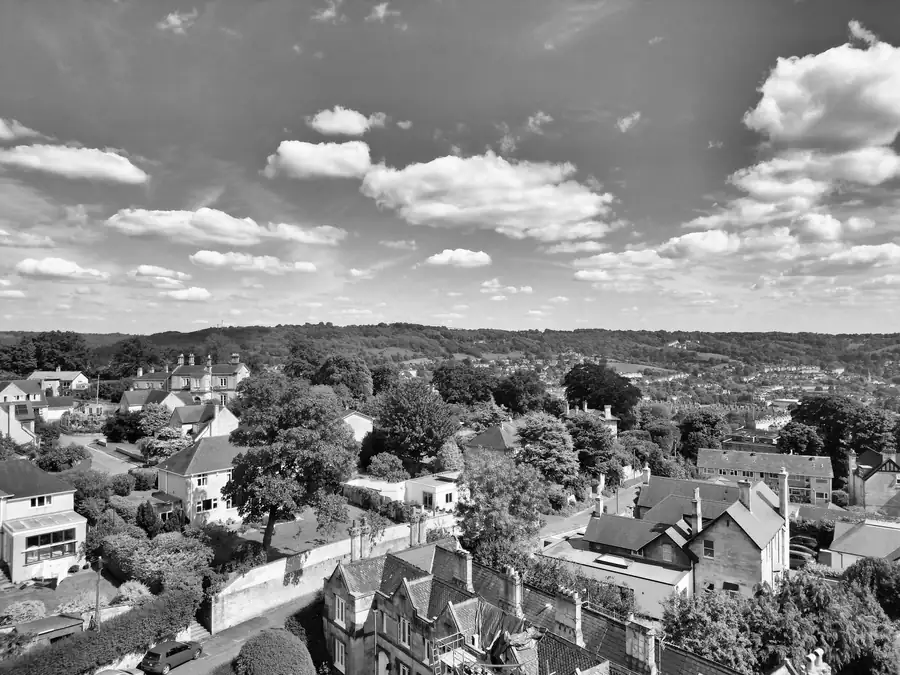
What usually fails
Hips go first. Every time. On a roof with four hips and a couple of gables, there are many metres of hip tiles bedded in mortar, and on a hilltop that mortar takes a beating from wind and frost. When it cracks, the hip tiles loosen and rain gets into the cut tiles beneath. Second is the eaves. Those deep overhangs were built with timber fascias and soffits, and many have since been boxed in with uPVC cappings. The capping looks fine from the drive while the original board behind it is rotting. Third, the valleys where a front gable meets the main roof. They gather leaves from big gardens and, on a clay roof, are often laced or swept tile valleys that are slow and fiddly to repair.
The hidden one
A good number of these roofs were laid with no underlay at all, just tiles on battens with lime mortar torched up underneath. If yours still has no felt, a few slipped tiles will let in far more water than they would on a later roof. We’d treat a leak like that as a warning about the whole roof, not one tile.
Selsdon’s garden village semis: bays, mismatched halves and loft conversions
Most of Selsdon was built from 1926 onwards on the fields that came with the Selsdon Park estate sale, and the result is street after street of hipped semis along roads such as Selsdon Park Road and Farley Road. The roofs are smaller and simpler than Sanderstead’s, but each pair has a few weak spots that turn up again and again. Our Selsdon roofing page covers the area itself, including Forestdale, the 1960s and 70s estate on Selsdon’s eastern edge.
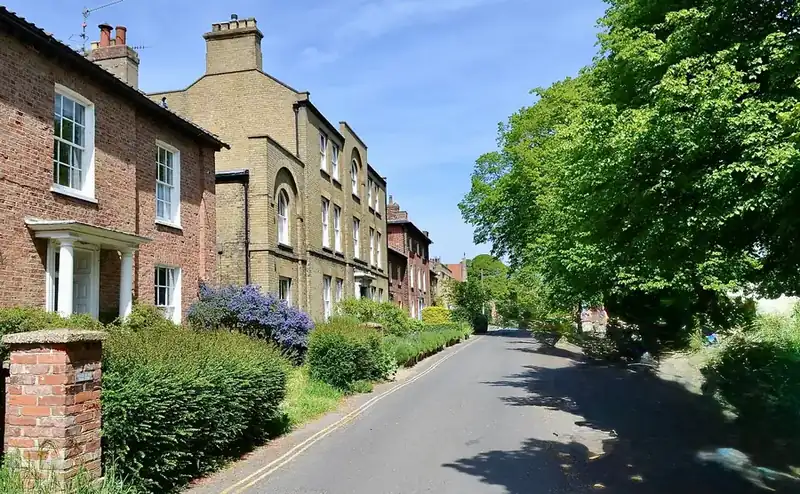
The bay window roof is the usual one. Over each front bay is a small roof of tiles, lead or felt, tucked under the first-floor window sill. When the lead or felt splits, or the flashing against the wall lets go, water comes in over the bay and turns up as a stain in the front room ceiling. Cheap to fix, but easy to misdiagnose, because everyone assumes the main roof has gone.
Then there is the party wall line. A pair of semis shares one roof, but after ninety years the two halves have usually had different owners and different repairs. One side may have new concrete tiles and membrane while the other keeps its old clay tiles with no felt. The joint between them, on the ridge and down each slope, is a common place for water to get in. A hip-to-gable loft conversion on one half makes that joint more awkward again. Any decent quote for one half should say how the edge against next door will be finished.
New Addington: the Boot’s Estate and the council houses that followed
New Addington began in 1935, when the First National Housing Trust bought 569 acres of Fisher’s Farm for what it called a garden village. The trust’s chairman, Charles Boot, gave the early streets the nickname the Boot’s Estate. Building stopped in 1939. After the war the County Borough of Croydon, not the London County Council as people often assume, bought the rest of the land and kept going. The last big phase, around Fieldway, was finished in 1968. There is more on the area on our New Addington roofing page.
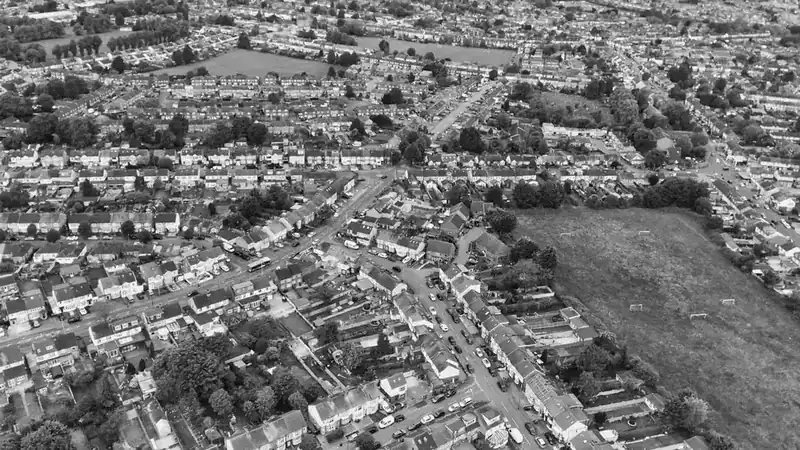
Most of the houses, from Central Parade out to Headley Drive and King Henry’s Drive, are brick semis and short terraces with fairly shallow pitched roofs, concrete interlocking tiles and very little overhang at the eaves. All three cause trouble. A shallow pitch is close to the minimum many tiles are rated for, so a lifted tile lets in wind-driven rain. Short eaves put the gutter right against the wall, and when it overflows the water runs down the brickwork and into the top of the wall. Concrete tiles of this age also lose their surface and soak up more water each year. We explained how to tell when they are finished in our post on Croydon’s concrete tile roofs.
Two things to mention when you call
Not every house on the estate is plain brick. Around King Henry’s Drive there are postwar two-storey semis with metal-clad upper walls. These steel-framed houses count as non-standard construction, and their roof and fixings differ from a brick house’s, so tell the roofer before anyone climbs a ladder. The early prefabs on Castle Hill were built with asbestos cement panels before they were cleared in the 1960s, and asbestos cement was used in soffits, gutters and garage roofs on many British estates of that era. A careful roofer will check before cutting or drilling anything.
Ownership is the other thing to mention. Plenty of houses here are ex-council, and where a block or a maisonette pair was sold flat by flat, the council or another freeholder may still own the roof. Worth finding out before you pay anyone for a survey.
What 150 metres up does to a roof
In this part of the borough, altitude is what pushes a roof towards needing work. The South East is one of the drier parts of the UK, so rainfall is not really the problem. The problems are wind and cold. Up here, south-westerly gales arrive with little to slow them down, and the plateau holds frost on still winter nights after the lower ground has warmed. New Addington’s Little Siberia nickname was well earned, and the higher roads in Sanderstead and Hamsey Green are not far behind.
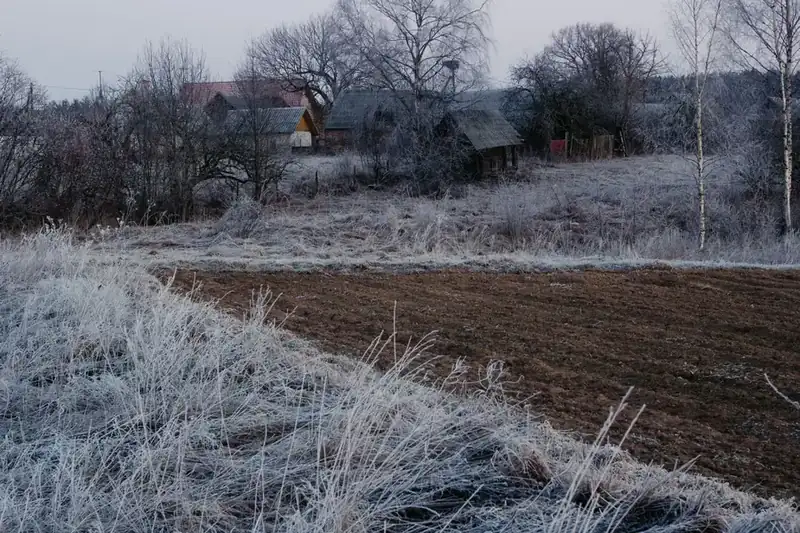
Wind attacks the edges of the roof. Ridges, hips and verges catch the uplift first, and loose or poorly bedded tiles there are the first to go. Frost causes a slower kind of damage: water soaks into mortar joints and porous tiles, freezes and expands, and over a few winters the joints crumble and tile surfaces flake off. Our Kenley and Coulsdon guide covers roofs on the hills across the Caterham valley, and it is the same story there. On this side, the useful habit is a quick look at the ridge from the garden after each big storm. A gap in the ridge line or a fallen piece of mortar on the patio is cheap to fix in October and much dearer to fix in February.
Kings Wood, Selsdon Wood and the gutters underneath
There is more woodland here than most people expect inside London. Kings Wood, about 147 acres between Limpsfield Road and Kingswood Lane, was bought by the council in 1937 and is now public open space. Selsdon Wood, around 200 acres of meadow and old woodland owned by the National Trust, borders Forestdale. Sanderstead Plantation tops the hill. Add the oaks and beeches left in large Sanderstead gardens and a lot of roofs here sit within reach of a tree.
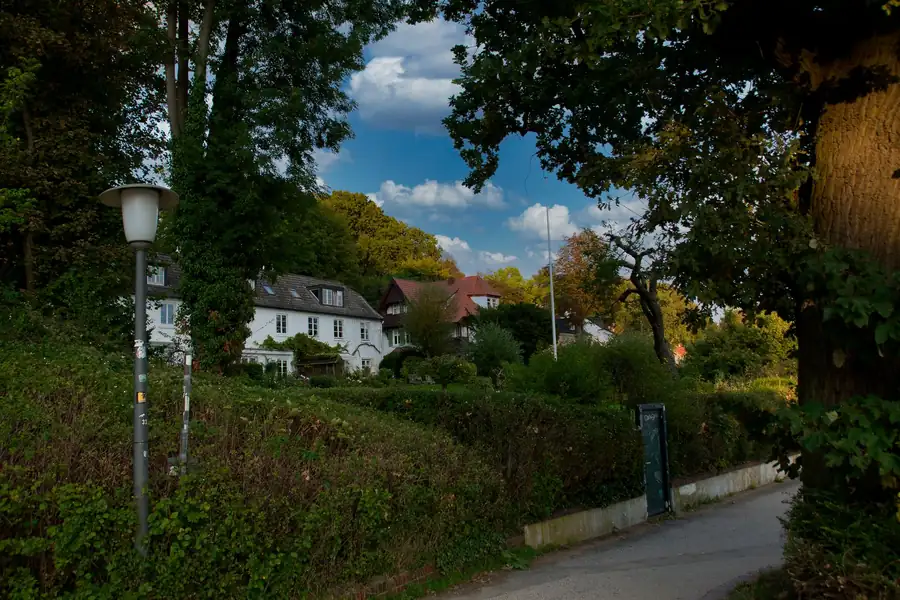
In practice that means gutters full by mid-November, valleys packed with wet leaves that hold water against the tiles, moss spreading across any slope that faces north into the shade, and the odd branch through the roof after a storm. We wrote a separate piece on what trees do to Croydon roofs. The point to add for these streets is about permission. If a tree near your house has a tree preservation order, you need the council’s consent to cut it back, even branches hanging over your own roof, except for some narrow exemptions. The government’s guidance on tree preservation orders explains how that works. Allow time for it before the scaffold goes up.
Croydon Council, Sanderstead Village and the conservation question
All three places are in the London Borough of Croydon, so Croydon Council handles planning, building control and tree consents for each of them. The borough boundary is close on the southern side, though. Past Hamsey Green you quickly reach Warlingham, which is Tandridge in Surrey and has its own rules. If your address is near the edge, check which council covers it.
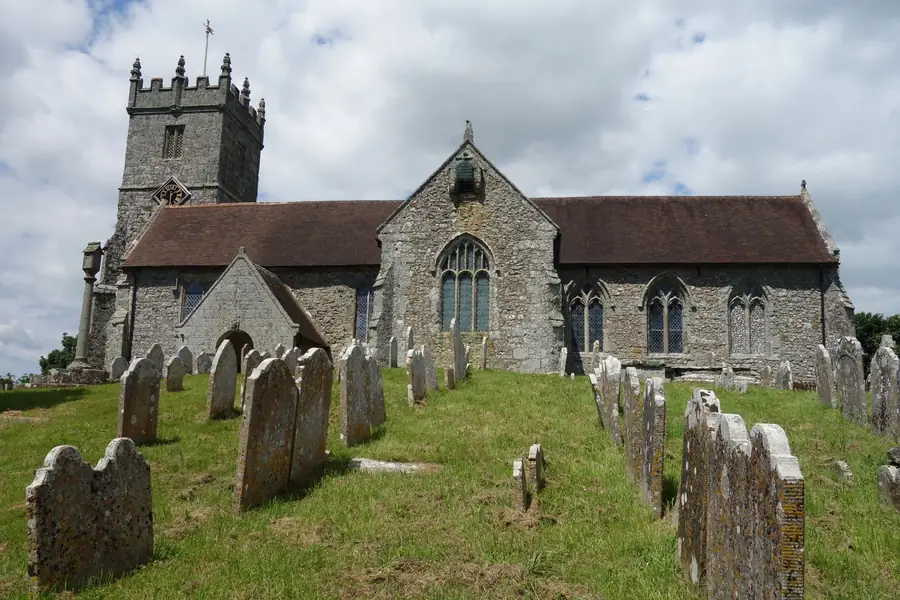
At the moment there is no conservation area in any of the three. You can confirm that against the council’s directory of conservation areas. The nearest is Addington Village, the small historic settlement just north of New Addington, whose boundary was last redrawn in 2020. That may change for Sanderstead. In December 2025 the council published a list of nine places it will assess for conservation area status, and Sanderstead Village is on it, centred on the pond and the Grade I listed All Saints’ church, whose oldest parts date from around 1230. Nothing has been designated yet. If you live in the old village and plan to change your roof covering or add roof windows facing the road, check the current position first.
Outside those spots, most roof work on a house needs no planning application: like-for-like re-roofing, repairs, new ridges, and rooflights on the rear slope within permitted development limits. Two exceptions catch people out. Maisonettes and flats have no permitted development rights for roof alterations. And a re-roof of more than a quarter of the roof area still has to meet building regulations, whatever the planning position. North Croydon is very different on this, with three conservation areas within a mile of each other, as our Thornton Heath and Norbury guide explains.
What roof work costs across the three, house by house
These are typical 2026 ranges including VAT and normal access. Treat them as a guide for budgeting and comparing quotes, not a fixed price. A survey of your roof will narrow them down.

| House and job | Typical range |
|---|---|
| Sanderstead detached: rebed or dry-fix all ridges and hips | £800 to £2,000 |
| Sanderstead detached: replace rotten fascias and soffits behind old cappings | £2,000 to £4,500 |
| Sanderstead detached: full re-roof in concrete interlocking tiles | £14,000 to £22,000 |
| Sanderstead detached: full re-roof in clay plain tiles | £20,000 to £34,000 |
| Selsdon semi: re-cover or reflash a leaking bay roof | £350 to £900 |
| Selsdon semi: re-roof one half, including the joint with next door | £9,000 to £14,000 |
| New Addington semi or terrace: rebed ridge and verges | £450 to £1,200 |
| New Addington semi or terrace: full concrete tile re-roof | £6,500 to £10,500 |
| Any of the three: clear and check gutters and valleys | £80 to £250 |
Sanderstead’s prices run highest because of the size of the roofs: more hips and valleys, more cut tiles, and longer scaffolds around detached houses. New Addington’s simple gabled roofs come out cheapest. The figure to look for on any quote is how the edges will be finished, whether that is a dry-fix ridge system on an exposed hilltop or the junction with next door’s half of a semi. That line is where cheap quotes cut corners.
Book a free roof survey in Sanderstead, Selsdon or New Addington
Frequently asked questions
Is Sanderstead a conservation area?
Not at the moment. None of Croydon's designated conservation areas are in Sanderstead, Selsdon or New Addington. In December 2025, though, Croydon Council named Sanderstead Village, the old core around All Saints' church and the pond, as one of nine places it would assess for conservation area status. If you live near the church and want to change how your roof looks, check whether a designation has gone through before you commit to anything.
Who built New Addington, and does it make a difference to my roof?
The First National Housing Trust started it in 1935 and had put up 1,023 houses by the time war stopped building in 1939. After the war the County Borough of Croydon bought the land and carried on, finishing another 1,412 houses in 1968. So the estate has two generations of house with different builders, specifications and, now, owners. A roofer needs to know which one yours is, and whether the council or a private freeholder still owns part of the building, before quoting.
Do I need permission to re-roof my semi in Selsdon?
Usually not planning permission. A house outside a conservation area can normally be re-covered like for like, or in a similar-looking tile, under permitted development. Building regulations still apply, though. Replacing more than a quarter of the roof counts as renovation, so the job has to be signed off by Croydon's building control or by a roofer registered with a competent person scheme, and the loft insulation may need bringing up to standard. Flats and maisonettes have no permitted development rights for roof changes at all.
Why do roofs in New Addington seem to need more mortar repairs?
Cold. The estate sits on an exposed plateau and has been called Little Siberia since it was first built, because frost settles there more often than in the rest of Croydon. Water gets into the sand and cement under ridge tiles and along the verges, freezes, expands and opens the cracks a little wider each time. On the shallow concrete tile roofs typical of the estate, that bedding is usually the first thing to fail.
Free roof survey and a fixed written quote
Anywhere in Croydon and the surrounding CR postcodes. No call-out fee.