
27 August 2026
Trees, Leaves And Croydon Roofs: The Damage Nobody Sees
Croydon is one of London's leafiest boroughs, and its roofs pay for it every autumn. What leaf fall actually does, and when to deal with it.
Croydon is one of the greener London boroughs, and the south of it in particular - Coulsdon, Kenley, Sanderstead, Shirley - runs up into genuine woodland at Croham Hurst, Addington Hills and the Happy Valley. That is most of the reason people move there. It is also the reason a roofer’s autumn diary in this borough looks nothing like one in a treeless part of London. Leaf fall does not damage roofs the way a storm does, all at once and visibly. It works slowly, in places nobody looks, and the bill arrives years later as a rotten valley board or a soaked internal wall. Meanwhile the rules on doing something about the tree are stricter than most people expect: six weeks’ notice to the council for work on a tree in a conservation area, and Croydon has 21 of those. What follows is what goes on up there while nobody is watching.
Where the leaves actually end up
Very little of what comes off a tree stays on the tiles. A pitched slope sheds leaves the same way it sheds water, which is the whole point of it, so the material collects wherever the roof stops shedding and starts collecting.
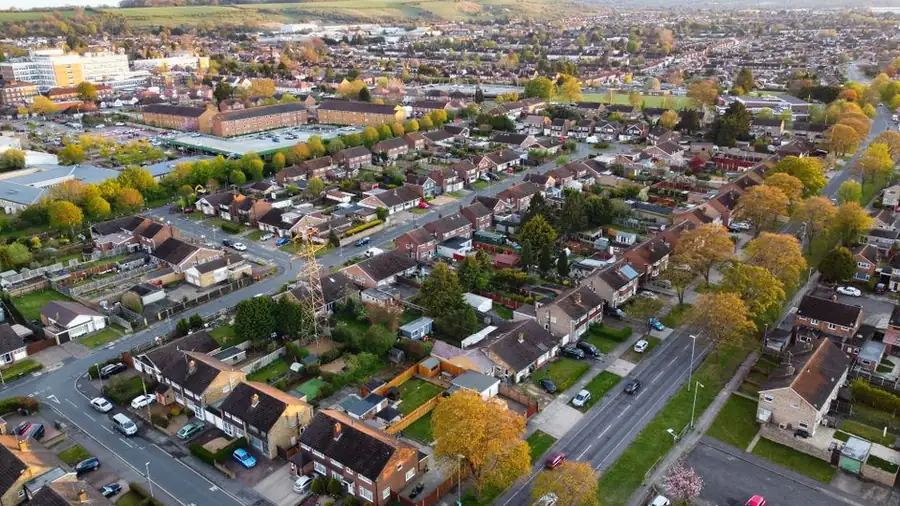
That means four places, in order of how expensive they are to get wrong: valleys, behind chimney stacks, in the gutters, and in the hopper heads at the top of the downpipes. Flat roofs over bay windows and rear extensions collect everywhere at once, because they have nowhere to shed to.
None of those four is visible from the pavement, and only one of them - the gutter - is visible from an upstairs window. That is the entire problem in a sentence. If you want a simple annual job that prevents most of what follows in this article, it is a proper gutter and downpipe clearance once the leaves are down.
Here is the short version, if you would rather watch than read:
Valleys are the expensive one
A valley is the channel where two roof slopes meet, lined in lead, fibreglass or a purpose-made tile. Every terrace with a rear back-addition in Thornton Heath, Addiscombe or South Norwood has one, and so does every interwar semi with an L-shaped plan.
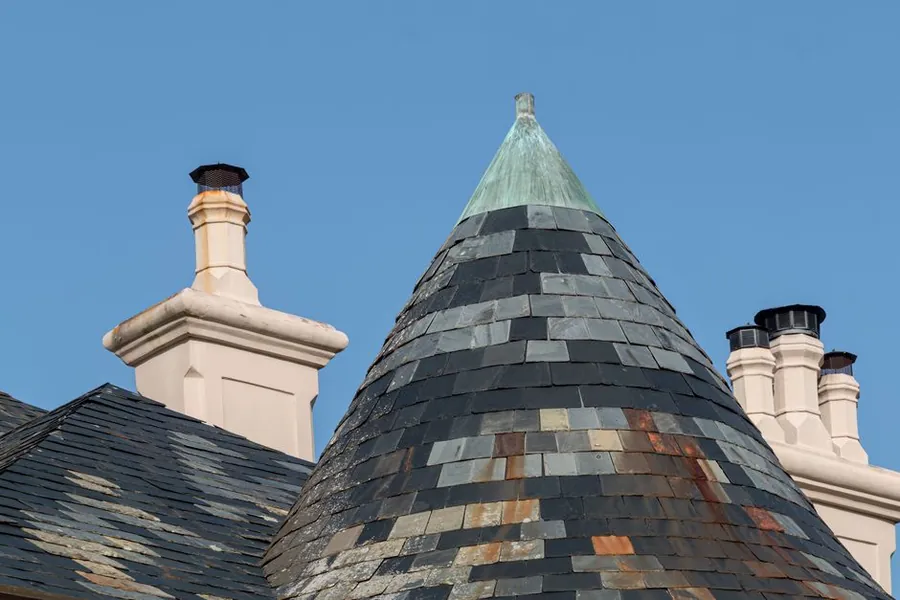
It is also the single narrowest point on the roof and it is fed by two slopes at once. Pack it with leaf litter and the litter behaves like a sponge with a dam behind it. Water backs up sideways under the slates, past the point the lead was designed to protect, and soaks into the timber underneath. Because it drains slowly rather than not at all, the ceiling below often shows nothing for the first few years.
What you eventually find is rot in the valley board and the sole plate, and a repair that involves stripping back both slopes rather than lifting a few tiles. A valley cleared every autumn costs almost nothing. A valley left for fifteen years under a lime tree is four figures.
Gutters, hoppers and the water that ends up in the wall
The gutter is where people do look, which is why gutter problems get blamed for things they did not cause and ignored when they matter.
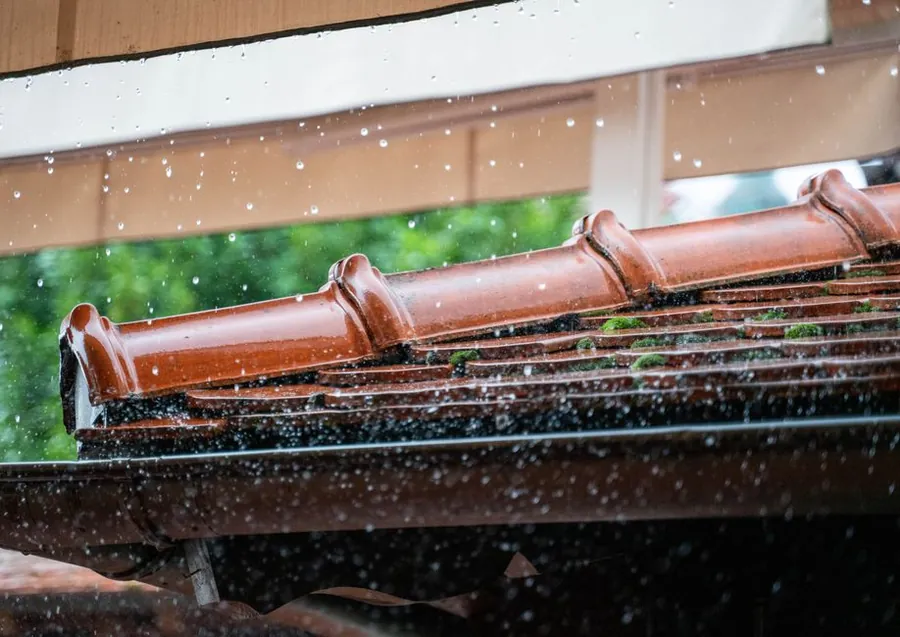
A blocked gutter does not usually leak into the loft. What it does is send water down the outside of the wall, in the same place, every time it rains. On the solid nine-inch brickwork of a Victorian terrace, with no cavity to stop it, that produces internal damp on the top floor that looks exactly like a roof leak and is nothing of the kind. Chasing it as a roof problem is how people end up paying for repairs that change nothing.
The other thing standing water does is rot the timber behind it. A gutter that has held wet leaf mould for several winters will have taken the fascia board with it, and once the fixings lose their grip the gutter starts to fall away at the joints, which accelerates everything.
The downpipe that has been blocked for two years
Hopper heads - the open funnels at the top of some downpipes, common on the older Croydon stock - are leaf traps by design.
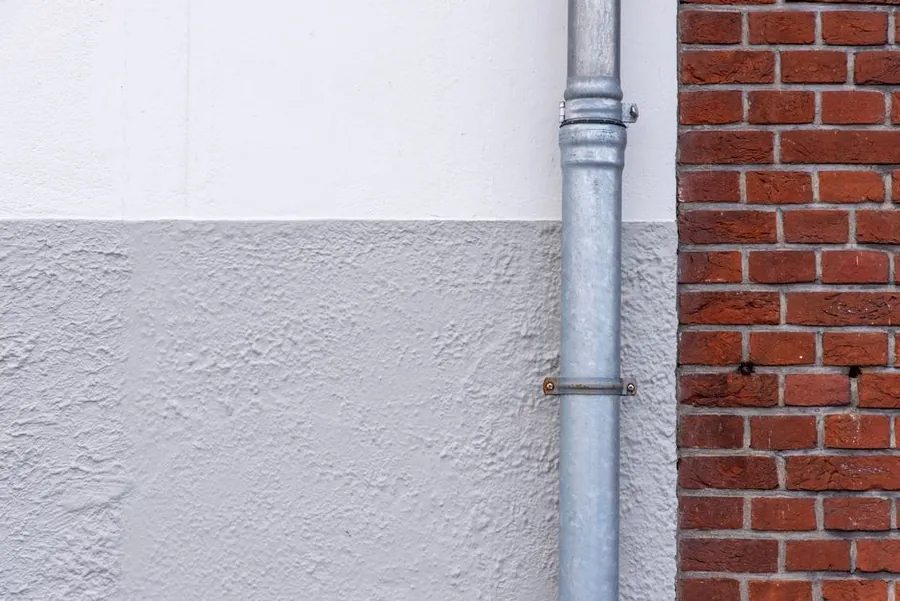
A blocked downpipe is deceptive because the failure is not where the blockage is. Water backs up above it and finds the nearest joint, so you get a persistent wet patch halfway up a wall while the pipe below stays bone dry. People assume a cracked pipe, replace the section, and the problem carries on.
The tell is timing. Damp that appears only during and immediately after heavy rain, and dries out between, is rainwater goods almost every time. Damp that is there in January regardless of the weather is usually something else. It is worth standing outside in the rain for two minutes with a torch before spending anything - you can very often see the overflow point directly.
Shade, moss and the north-facing slope
Anything growing under mature planting has a north slope that never really dries out between October and March, and moss follows.
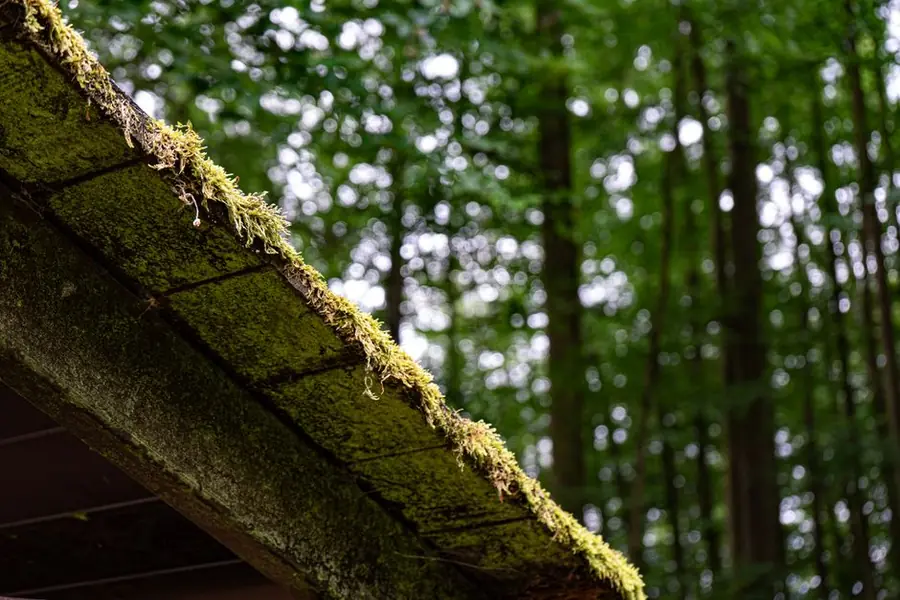
Moss is not the villain it is sold as, but it is not harmless either. What it does mechanically is three things: it holds moisture against the covering, which matters most on concrete tile approaching the end of its life; it grows under the lap and slowly lifts the tail of the tile; and in heavy rain it sheds in clumps straight into the gutter you have just paid to clear.
The important thing is not to let anyone talk you into a pressure washer. High-pressure water strips the surface off concrete tiles, drives water up under the laps, and takes ten years off the covering in an afternoon. Scraping by hand, and accepting that it will come back on a shaded slope, is the honest approach. Anyone quoting for permanent removal on a roof that sits under a canopy is selling something that cannot be delivered.
Branches that touch the roof
There is a difference between a tree near the house and a tree in contact with it, and the second one causes damage of a completely different kind.
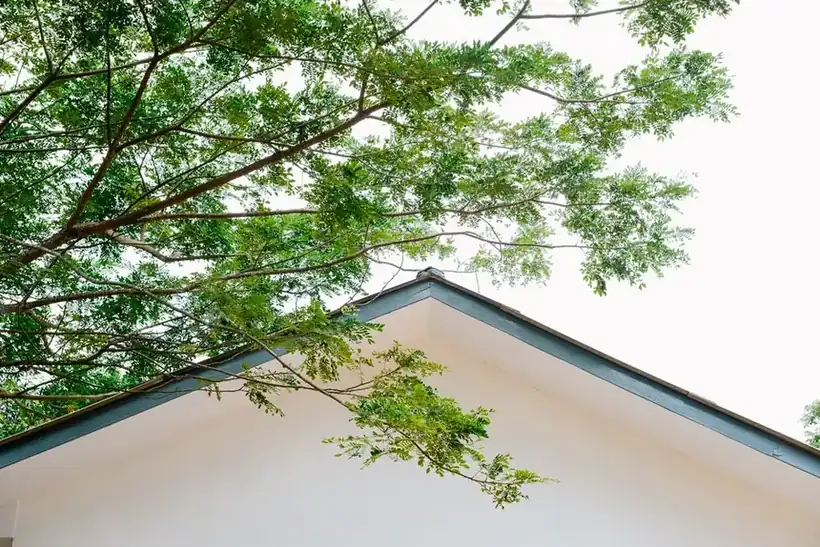
A branch resting on tiles does not need a storm to do harm. Ordinary wind moves it a few inches thousands of times a winter, and the abrasion wears the surface off the tile where it lands and gradually works the tile out of position. On slate it can snap a nail. Squirrels and rats use it as a bridge, which is how the loft becomes a problem, and the whole area under it stays permanently damp because the canopy stops it drying.
The rule of thumb worth applying: nothing should touch the roof, and ideally nothing should sit directly above it. Clearance of a couple of metres removes most of the risk without turning the tree into a stump.
You cannot always just cut it back
This is where Croydon differs from a lot of places, and where people get themselves into trouble. The common law right to cut back growth crossing your boundary is real but limited, and it is overridden by two things this borough has plenty of.

The first is a tree preservation order. Croydon Council’s guidance on tree preservation orders and what they mean for works is worth reading before anyone climbs anything: a dead tree can be dealt with without formal consent but still needs five days’ notice to the council, and where a tree is dying or dangerous only the urgent work can go ahead without consent.
The second is conservation area status. Trees in a conservation area are protected whether or not they carry an order, and the council requires six weeks’ written notice before work begins. That window matters if you are trying to get clearance done before winter. It is the same set of designations that governs what you can do to the roof itself, which we covered in our guide to planning permission for roof work in Croydon.
And if the tree is on the pavement rather than in a garden, it is the council’s, and the pruning request goes to them. Cutting a street tree yourself is not a grey area.
Timing, and why the ladder is a bad idea
Most people book this too early. Limes and horse chestnuts are largely down by the end of October, but London planes - the ones lining the main roads through the borough - hold on well into December.
Clear a plane-lined street in early October and you have paid to do half a job. Late November into December, once the fall has finished and before the sustained winter rain, is the window that actually works. The one exception is a valley that is already overflowing, which should be dealt with the week you notice it regardless of the calendar.
As for doing it yourself: the Health and Safety Executive’s guidance on roof work records that nearly one in five deaths in construction involve roof work, and a substantial share of those are falls from ladders and through fragile surfaces rather than dramatic falls from height. A gutter at the front of a bungalow is one thing. A rear valley on a three-storey terrace, reached off a ladder footed on soft autumn ground, is genuinely how people get badly hurt.
If your Croydon roof sits under trees and has not been looked at since the leaves came down last year, we will clear it, tell you what state the valleys and rainwater goods are in, and put it in writing. Get a free look at the roof.
Frequently asked questions
How often should gutters be cleared on a Croydon house with trees nearby?
Once a year is enough for most houses, but on a street of mature planes or limes, or anywhere backing onto the woodland at Croham Hurst, Addington Hills or Shirley, twice is more realistic - one clearance in late autumn once the fall has finished, and a check in spring for seed and blossom debris. What matters more than frequency is doing it after the leaves are down rather than in the middle of the fall.
Can I cut back a branch that is overhanging my roof?
In common law you may cut back growth that crosses your boundary, up to the boundary line and no further. That right is overridden by a tree preservation order or by the tree standing in a conservation area, and Croydon has both in quantity. In a conservation area you must give the council six weeks' written notice before doing the work. Check before you cut, because the penalties attach to the person doing the cutting.
Does moss on the roof actually cause leaks?
Rarely on its own. What it does is hold water against the covering, wash down into the gutters in heavy rain and block them, and lift the tail of a tile where it grows thickly under the lap. On a shaded north slope under trees it will come back however thoroughly it is removed, so the sensible approach is managing it rather than chasing eradication.
Why does my roof leak only in heavy rain and not in ordinary rain?
That pattern usually points at capacity rather than a hole. A valley or gutter that is partly blocked copes fine with drizzle and overtops in a downpour, so water goes over the edge of the lead or backs up under the tiles. It is one of the most common calls we get in Croydon after a summer thunderstorm, and it is almost always debris rather than a failed covering.
When is the best time of year to have this dealt with?
Late November through December for most Croydon streets. Limes and horse chestnuts finish early, but London planes hold their leaves well into December, so a clearance booked for early October on a plane-lined road gets done twice or not properly at all. Book it after the fall, and before the first sustained winter rain.
Free roof survey and a fixed written quote
Anywhere in Croydon and the surrounding CR postcodes. No call-out fee.