
8 September 2026
What A London Summer Does To A Croydon Roof
Croydon sits in the hottest corner of the country, and Kenley set a UK heat record in 2022. What heat does to tiles, lead, felt and timber, and what to check once it cools.
Everyone writes about what winter does to a roof. Frost, storms, blocked gutters, the usual list. Almost nobody writes about July, and in Croydon that is a gap, because this borough sits in the hottest corner of a warming country. During the heatwave of 19 July 2022, when the UK passed 40 degrees for the first time, the Met Office station at Kenley Airfield recorded a night that never dropped below 25.8 degrees, which was at that point the warmest night the country had ever measured. That station is inside the borough. So are around 390,000 people and their roofs, most of which were built long before anyone expected weather like that. Heat does not blow tiles off. It works slowly, by expansion and contraction, and it sends the bill in with the first autumn storm. Here is what it is doing up there while you are indoors with the curtains shut.
Here is the short version, if you would rather watch than read:
Croydon’s roofs run hotter than the country’s
Two things make a Croydon roof hotter than a roof in, say, Carlisle. The first is geography. The south east is the warmest region of the UK, full stop. The second is the city. Greater London is an urban heat island, and the Mayor’s office publishes a climate risk map for London that shows how the built-up north of the borough, around Thornton Heath, Norbury and South Norwood, holds onto heat at night in a way the greener slopes towards Coulsdon do not.
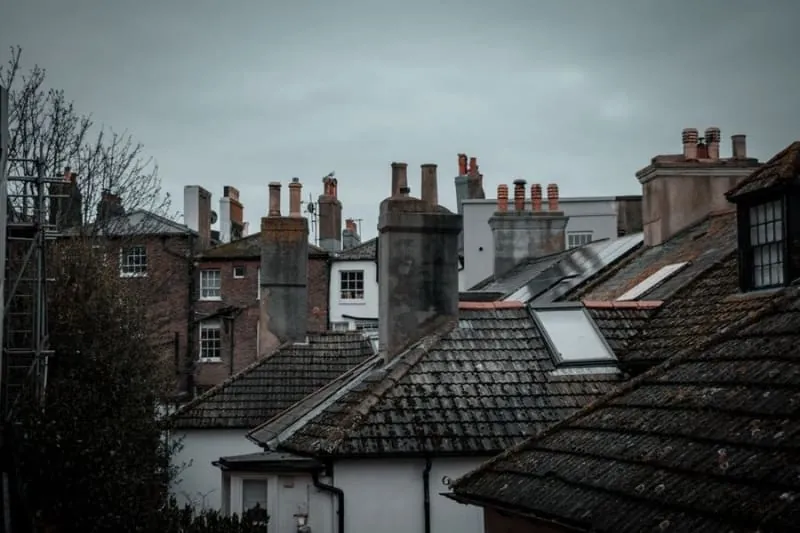
A roof is the part of the house that takes all of that. A dark concrete or slate slope facing south can run well past 60 degrees on the surface in direct sun, while the air a few feet above it is 33. Then the sun goes down and the roof cools by 30 or 40 degrees in a few hours. Every material up there grows in the day and shrinks at night, and they all do it by different amounts. The tiles, the mortar holding the ridge, the lead around the chimney, the felt on the extension and the plastic gutter along the eaves all move against each other. That is the whole story of heat damage. It also explains why a hot summer tends to arrive as a flat roof repair call in October rather than an emergency in July.
The heat island: why nights matter as much as days
Daytime peaks get the headlines. Roofs care more about the swing. In open country the night brings a roof back close to air temperature and gives the materials a rest. In a dense London suburb the brick, tarmac and neighbouring roofs keep radiating heat after dark, so the roof never fully cools and the next day starts from a higher base.
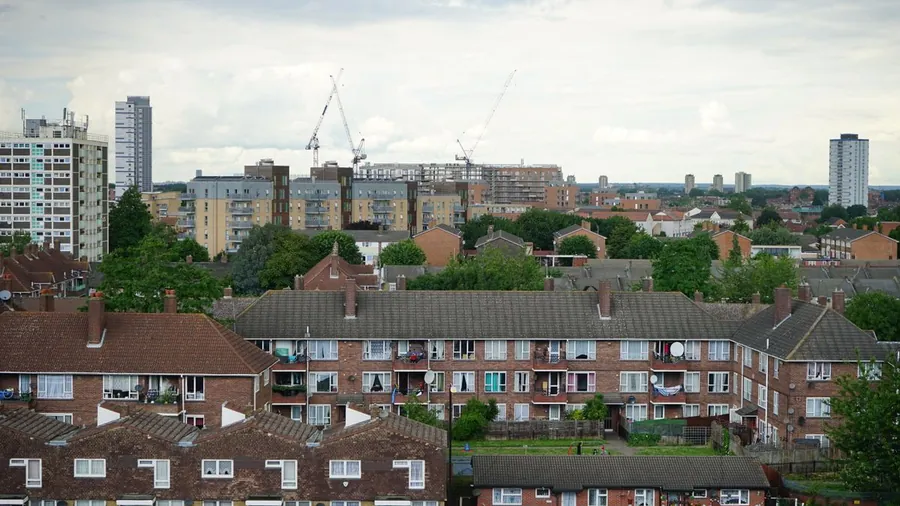
Kenley’s 25.8 degree night made the record books for that reason. The Met Office’s own review of the July 2022 heat notes that 46 stations across the country beat the previous national record that week, but the warm-night figure came from Croydon. For a roof the practical result is a longer stretch at high temperature with less recovery, which is exactly what fatigues lead and bakes bitumen.
There is a human side to it too. Loft rooms and top-floor flats in converted Croydon houses become unbearable in a heatwave because the roof above them is the hottest surface in the building. An uninsulated pitched roof over a loft conversion in Addiscombe will be radiating heat down at midnight. That is a comfort problem, but it is also a clue that the roof is running hard.
Tiles, mortar and the ridge line
Clay and concrete tiles cope with heat well on their own. They have been fired or cured at far higher temperatures than any summer will manage. The trouble is the things holding them together.
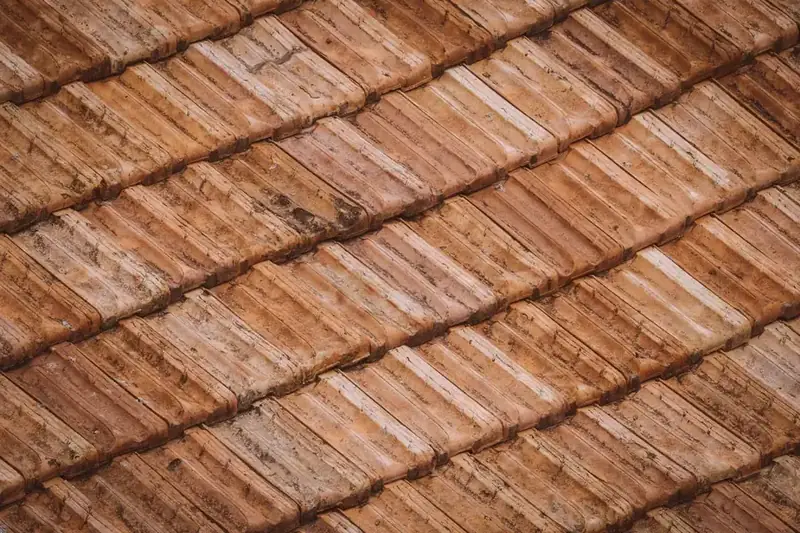
Mortar is the first casualty. On most Croydon houses built before about 2015, the ridge tiles, the hip tiles and the verges are bedded in sand and cement. Mortar does not stretch. When the tiles either side of it expand in the sun and pull back at night, the mortar takes the strain and cracks, first as hairline fractures and then as chunks that let go. The 2014 revision of British Standard 5534 made mechanical fixing of ridges and hips compulsory, because mortar on its own kept failing, but the vast majority of the borough’s roofs predate it. If you have ever found a lump of grey mortar on the patio in September, this is where it came from.
Concrete tiles have their own weakness. Their surface is a thin coloured coating over a coarser body, and UV and heat wear that coating away over the decades, which is why an old concrete roof goes pale and rough and starts holding water and moss. We looked at how to judge that stage in our piece on postwar concrete tile roofs in Croydon. A hot summer speeds it up. Nothing dramatic happens in one year, but a roof that was on its last few seasons loses one of them.
Lead: the material that moves most
Lead is the flexible skin that seals a roof where it meets something else: a chimney, a wall, a valley, a dormer cheek. It is chosen because it moves, and heat is where that becomes a problem rather than a virtue.
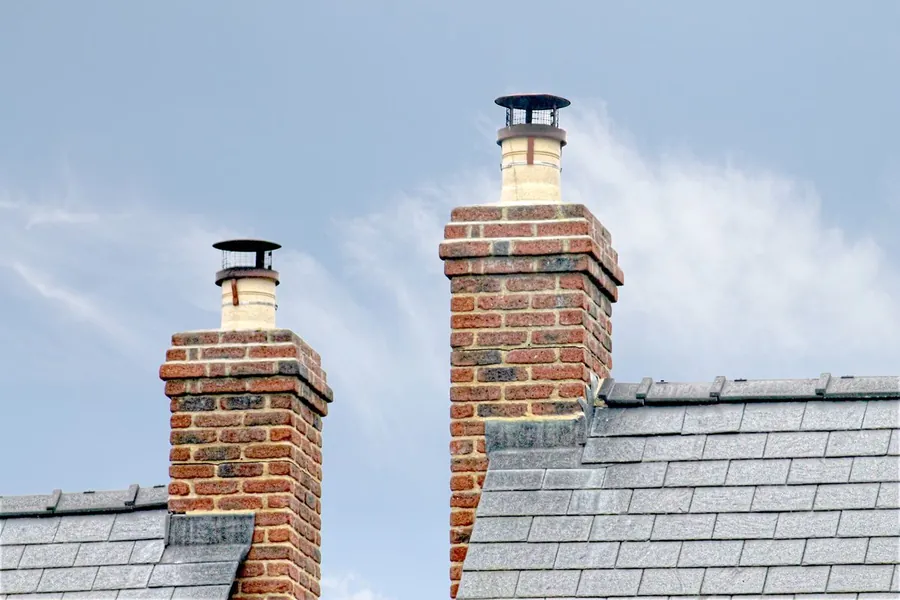
A length of lead grows measurably on a hot day and shrinks back at night. The Lead Sheet Training Academy, which sets the industry’s technical guidance, limits how long each piece can be and how it can be fixed, so that the sheet slides at its laps instead of tearing at a nail. Lead that was cut too long, or pinned through its overlap by a roofer in a hurry, cannot slide. It creeps down the slope a fraction each day, rucks up, and eventually splits along a fatigue line. Hot summers do that faster because the daily movement is bigger.
Croydon’s chimney count makes this matter. Victorian terraces in Thornton Heath and South Norwood and Edwardian houses around Addiscombe often have three or four stacks, each with a back gutter, two side flashings and a front apron. That is a lot of lead, much of it now fifty years old or more, and a cracked back gutter behind a chimney is one of the commonest leaks we trace. Chimney repairs after a hot summer are very often lead repairs.
Felt flat roofs and the extension out the back
If one part of a Croydon house genuinely suffers in a heatwave, it is the felt roof on the rear extension, the garage or the dormer. Built-up bitumen felt is dark, flat, fully exposed to the sun and made of a material that softens when warm.
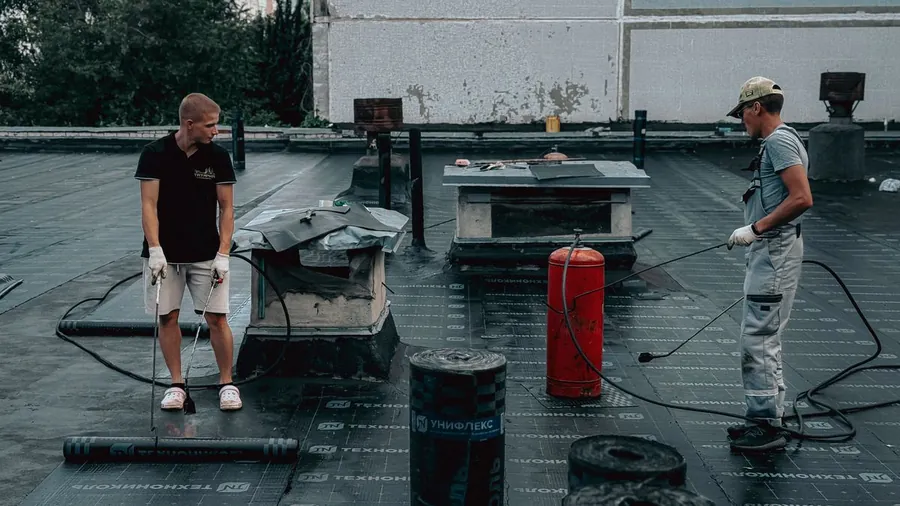
Three things happen. Blisters form where any moisture trapped under or between the layers turns to vapour in the heat and pushes the felt up into a bubble. Small firm blisters are harmless. Big soft ones eventually split. The surface crazes, as UV breaks down the bitumen and the top layer hardens into a pattern of fine cracks that trades call alligatoring. And the laps open, because the felt expands along its length in the day and cannot fully return at night, so over many summers the joints between sheets work loose. Rain then finds its way under a lap that looks closed from the ground.
Age decides most of it. A felt roof laid in the 1990s over a kitchen extension has done thirty summers, and on a dark roof in Croydon those were hotter summers than the felt was designed for. Modern membranes cope far better, and a pale reflective finish or a layer of solar-reflective chippings makes a real difference to surface temperature. If the roof is being replaced anyway, that is worth asking about.
Timber, plastic and the things that shrink
Two more materials react to heat in ways homeowners rarely connect to the roof.
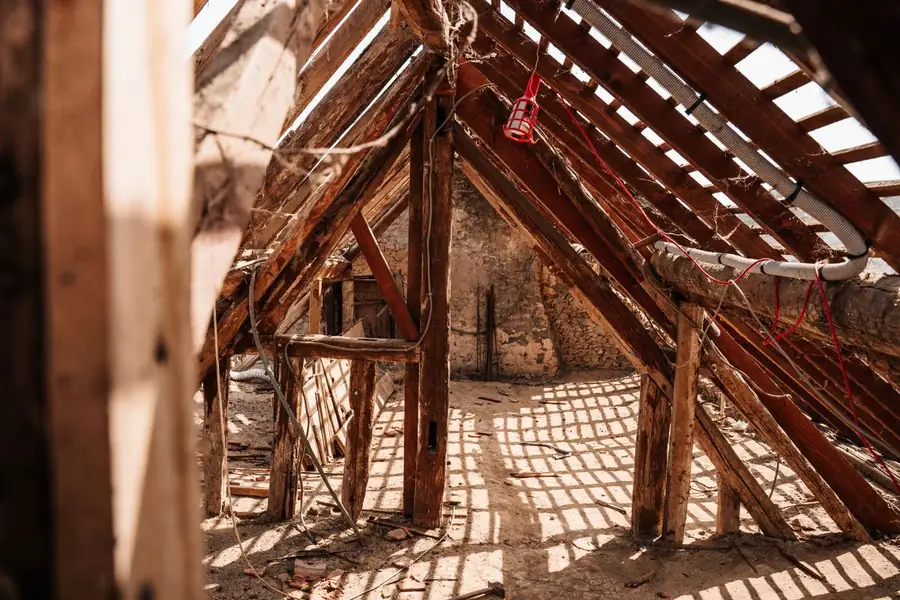
Roof timbers dry out in a hot loft. A loft space under a dark slope can sit at 45 degrees for a fortnight, and old softwood rafters and battens lose moisture and shrink a little across the grain. Nails that were tight loosen. Battens that were already tired lose their grip on the tile nibs, and the first strong wind of autumn finds the tiles that have gone slack. It is rarely structural, but it is why a run of slipped tiles often follows a hot summer rather than a wet one.
Plastic guttering is the other one. uPVC expands a lot in the heat, far more than the metal it replaced, and a long run on a south-facing elevation gets visibly longer in a hot afternoon. The rubber seals at each union are designed to absorb that, but after twenty years the seals harden, the joints weep and the run starts to sag between brackets. Anyone in a 1930s semi in Shirley or Selsdon who has noticed a drip from a gutter joint on a dry day has seen thermal movement in action. It is one of the cheaper things on this list to put right.
The storm that breaks the heat
Heat rarely does the final damage on its own. It sets the roof up, and the thunderstorm that ends the heatwave delivers the blow.

Summer storms over south London are short and violent. A month’s rain can fall in an hour, hitting a roof whose ridge mortar has just cracked, whose felt laps have opened and whose gutters are full of dust and seed from three dry weeks. The water goes wherever the summer made a way for it. Very often the leak that appears on a bedroom ceiling in a late-August storm gets blamed on the storm, when the storm only found the gap.
So the timing of a check matters. Looking at the roof in September, after the hot weeks and before the autumn rain settles in, catches the cracked mortar and the opened lap while they are still a morning’s work. We covered what the autumn leaf fall then adds in trees, leaves and Croydon roofs, and the two problems compound each other on a shaded roof under a big oak.
What to check once the weather turns
You do not need to go on the roof. Most of this is visible from the garden or the loft hatch, and a roofer can check the rest from a ladder in half an hour.
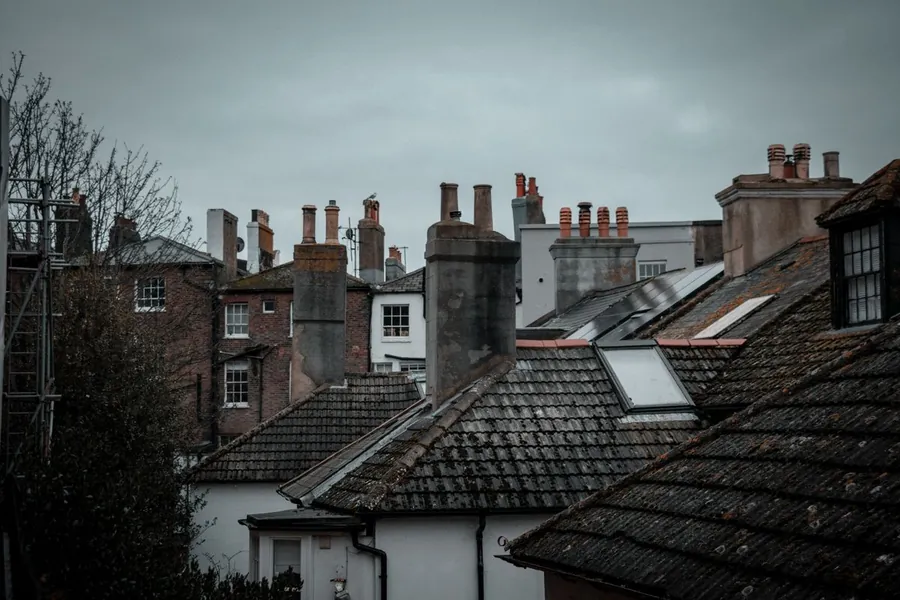
From the ground, look along the ridge for gaps or missing mortar, and check the patio and the gutters for grey fragments that have fallen. Look at the chimney flashings for lead that has slipped, rippled or pulled away from the brick. On a flat roof, look for blisters, exposed fibre where the surface has worn, and pooled water that has not drained a day after rain. On the gutters, look for drips at joints on a dry day and for runs that have sagged.
From the loft, go up on a bright day with the light off and look for daylight at the ridge and around the chimney. Feel the timbers around the stacks and valleys for damp, and look for the tide marks of old leaks. If any of it is beyond a quick fix, our guide to common roof problems in Croydon sets out what each symptom usually means and what putting it right involves. Heat is not the villain of the roofing year in Croydon. It is the accomplice, and a check before the rain is the cheapest way to deal with it.
Frequently asked questions
Can hot weather actually damage a roof in Croydon?
Yes, though rarely in a single afternoon. Heat works by repetition. Every hot day expands the tiles, the lead, the felt and the plastic gutters, and every cool night pulls them back. Over a few summers that cycle cracks mortar on ridges and verges, fatigues lead at its fixings and opens laps on felt flat roofs. The damage usually shows up as a leak in the first heavy rain of autumn rather than during the heatwave itself.
Why is Croydon hotter than the rest of the country?
Two reasons stack up. The south east is the warmest part of the UK to begin with, and Greater London adds an urban heat island on top, where brick, tarmac and roofs soak up heat during the day and release it at night. The Met Office's Kenley Airfield station, in the south of the borough, recorded what was then the warmest night ever measured in the UK during the July 2022 heatwave.
Which roofs in Croydon suffer most in a heatwave?
Dark, south-facing slopes take the brunt, so the hillside houses of Sanderstead, Purley and Coulsdon have roofs that run hotter than a shaded north slope in Norbury. Felt flat roofs on rear extensions and garages fare worst of all because a dark bitumen surface can pass 60 degrees in direct sun. Old mortar-bedded ridges and any lead that has been fixed too rigidly are the weak points on pitched roofs.
Should I get my roof looked at after a hot summer?
It is a sensible time for a check, ideally before the autumn rain rather than after the first leak. Ask for the ridge and verge mortar, the lead around chimneys, the laps and blisters on any flat roof, and the joints on plastic guttering. Most of what heat does is small and cheap to fix in September and expensive to ignore until January.
Do plastic gutters really move in the heat?
They do, and more than most people expect. A long run of uPVC gutter on a sunny elevation grows noticeably over a hot day and shrinks back at night. The rubber seals at each joint are designed to take that movement, but on older systems the seals harden and the joints start to weep. Brackets spaced too far apart let the run sag and pool water as well.
Free roof survey and a fixed written quote
Anywhere in Croydon and the surrounding CR postcodes. No call-out fee.