
2 September 2026
Scaffolding, Licences And Parking: The Access Costs In A Croydon Roof Quote
Access is often the biggest line on a Croydon roof quote. What scaffolding costs, when Croydon Council needs to licence it, and why parking suspensions catch people out.
Ask three roofers to price the same job in Croydon and the roofing element will often land within a few hundred pounds. The access element - scaffolding, licences, parking - is where the quotes separate, sometimes by a factor of two, and it is the part most homeowners skim past because it does not feel like roofing. On a two-storey house it can be a fifth to a third of the total, and on a terrace where the scaffold has to go up on the pavement and the parking bay in front has to be suspended, it can be the single largest line on the page. Croydon adds its own complications: controlled parking zones across a lot of the borough, narrow interwar avenues where a lorry cannot easily unload, and a council process for scaffolding on the highway that runs to its own timetable. This is what that part of the quote is actually made of.
Why access is the biggest variable in a Croydon roof quote
Roofing materials are broadly the same price in Croydon as in Coventry. Getting a person and their tools safely alongside a roof for a fortnight is not, and in a borough of half a million people it is a logistics job as much as a construction one.
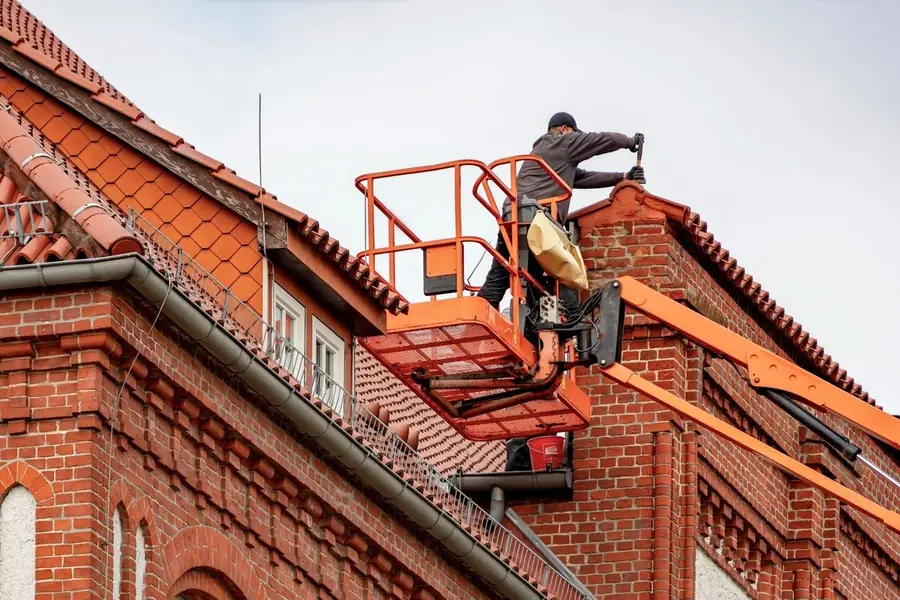
Three things drive the number. The first is the height and shape of the house, because scaffolding is priced by lifts and by elevations - a hipped roof needing scaffold on three sides costs far more than a gable end where one run does the job. The second is how long it stands, since hire runs on a weekly clock that keeps ticking through bad weather and through the wait for a part. The third is whether it touches the public highway, which is where the council enters the story and where the timetable stops being yours.
So read the line properly. Two quotes sitting £1,200 apart on the total cost of a roof repair are often two different assumptions about access and nothing to do with the roof at all.
When scaffolding needs a licence from Croydon Council
The dividing line is simple and worth learning: if the scaffold stands entirely on your own land, nobody needs permission. The moment a standard, a base plate or an overhang sits on the pavement, the verge or the carriageway, it is on the public highway and it needs a licence from the council.
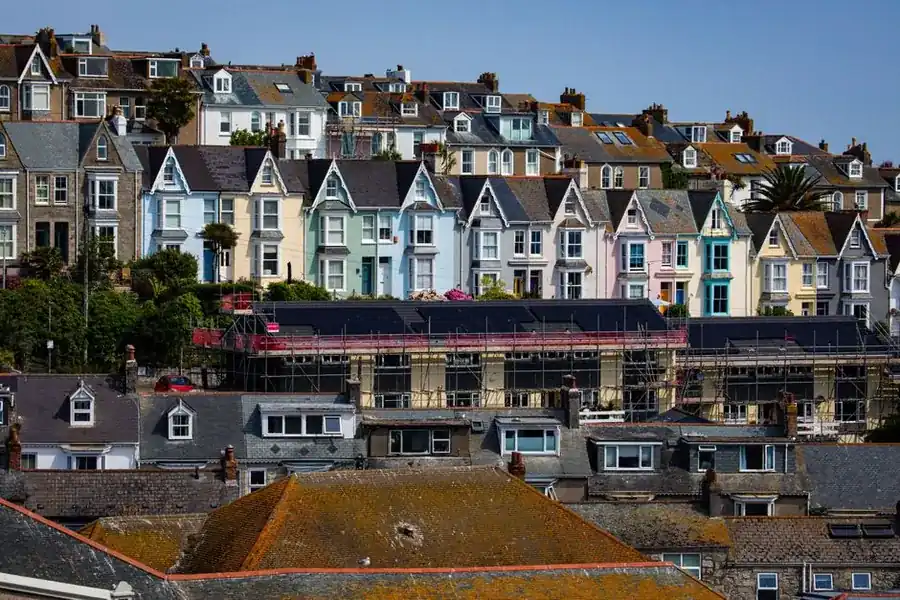
Croydon’s process is set out on its licence pages for scaffolding, containers and hoardings on the highway, and there are a few details in it that shape a job’s start date. The licence is issued to the scaffolding contractor, not to you. A neighbourhood safety officer visits before it is granted, to check the structure will not obstruct or endanger anyone using the street. The minimum period for a scaffold licence is one month, so a three-day repair on a pavement still pays for a month of licence. And if the work runs on, renewal has to be requested at least seven days before the existing licence expires, which is why an overrun on a licensed scaffold gets expensive in two directions at once.
Cherry pickers and mobile scaffolds get their own licence rather than escaping the system. If the machine parks on the road, there is still paperwork.
Parking: controlled zones, suspensions and five working days
This is the step that derails more Croydon start dates than weather does. Much of the borough sits inside a controlled parking zone, and the council keeps a published list of them. Where the space outside your house is a marked residents’ bay, a scaffold or a skip cannot simply occupy it - the bay has to be formally suspended first, and there is a charge for that.
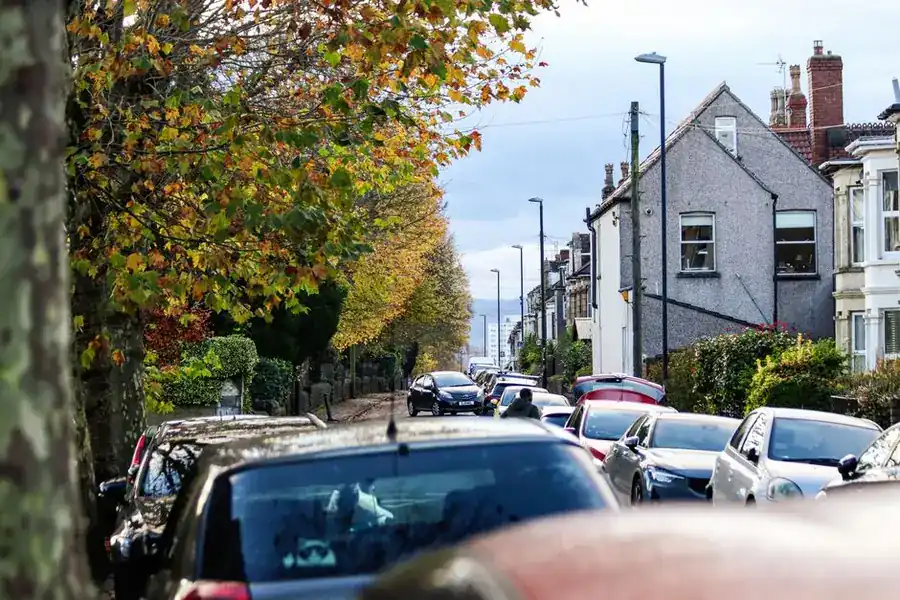
Croydon asks for a minimum of five working days’ notice before a suspension starts, and for skips inside a controlled zone the suspension has to be arranged before the skip permit application is completed. In practice that means a chain: suspension first, then the permit or licence, then delivery. A roofer who rings on Monday hoping to start Thursday with a skip on a bay in Addiscombe or South Norwood is going to be disappointed, and so are you.
The charge is small next to the scaffold. The delay is not. So when you are comparing start dates, ask straight out whether the parking side has been applied for or merely assumed - it is a fair question and it costs nothing to ask.
What the licence conditions actually oblige your roofer to do
A licence is not a receipt, it is a set of duties, and they cost money to meet. Understanding them explains why a pavement scaffold is priced so differently from one in your own driveway.
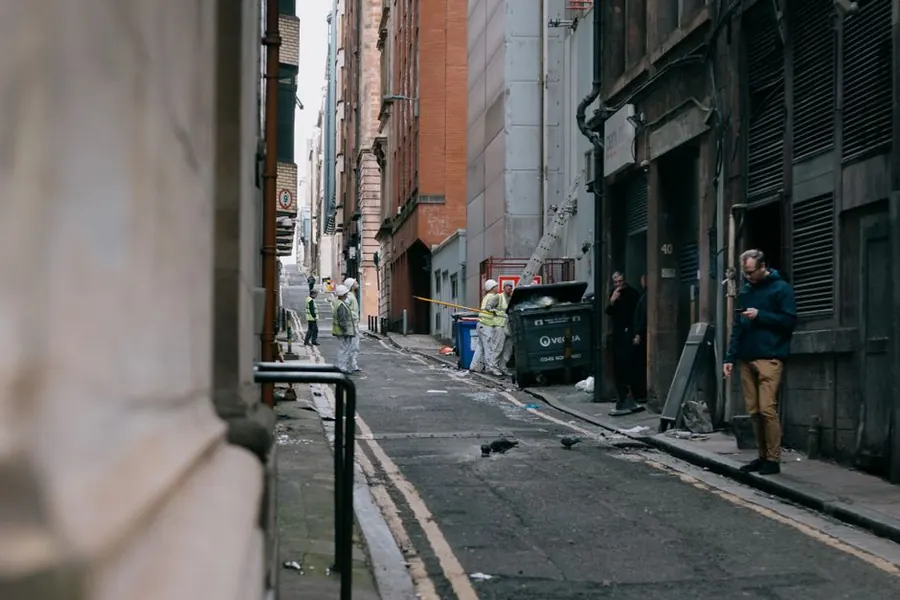
The recurring themes are pedestrian access, visibility and time. A route past the works has to stay open and usable, including for wheelchair users and pushchairs, which on a narrow Croydon pavement often means the scaffold has to be built as a bridged gantry rather than a simple frame. Structures on the highway have to be lit and marked through the hours of darkness, so debris netting, lamps and signage are all part of the hire. And the licence is time-boxed, with renewal on a fixed notice period, which is the mechanism that turns a slipped schedule into a second fee.
Separately from the council, the roofer’s own obligations sit under the Health and Safety Executive’s work at height rules, which apply whether or not a licence is involved. A scaffold has to be inspected before first use, at intervals after that, and again after anything that might have affected its stability. The usual evidence is a tag at the ladder access or a signed record kept on site.
Rear additions, alley gates and the terraced-street problem
Croydon’s Victorian and Edwardian terraces - Thornton Heath, Selhurst, the streets running off London Road - have their leaks in the same place: the back addition, the valley behind it, and the parapet gutters between neighbours. Reaching that roof is a different exercise entirely from working on the front slope.
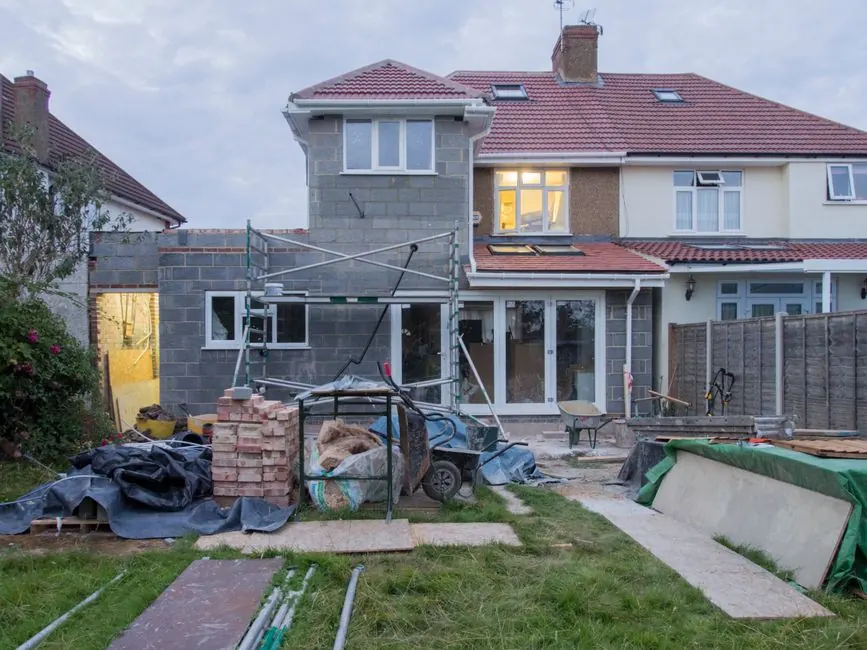
A rear scaffold has to be carried through the house or through a side alley, and many Croydon alleyways were gated years ago under anti-burglary schemes, so someone has to be found with a key. Where there is no alley at all, the tubes come through the front door and out through the kitchen, which adds a day, protection sheeting, and a conversation about the carpet. If the neighbour’s garden is the only sensible standing ground, that is a permission to secure before anyone quotes a start date - not a thing to discover on the morning.
Say all of this at the enquiry stage. A roofer who knows before quoting that the only way in is a gated alley off a Selhurst side street will give you a number that survives contact with the job, and a number that survives is worth more than a low one that changes on the morning. Where the roof itself is shared, the same instinct applies to the paperwork, which we went through in our piece on who pays for roof repairs in a converted Croydon flat.
Towers, cherry pickers and roof ladders: the middle ground
Full scaffold is not the only answer, and on small jobs it is often the wrong one. A dozen slipped tiles do not justify three weeks of tube and board, and a good roofer will say so rather than inflate a repair into a project.
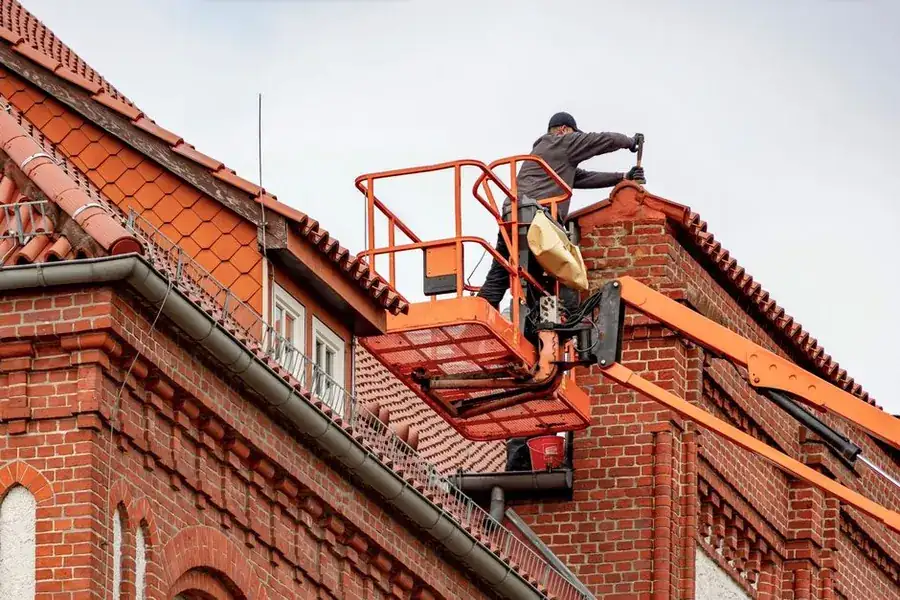
Mobile towers suit single-storey work, garage roofs and low rear extensions, and can be up and down in a morning. Powered access platforms - the cherry picker - work well for chimney inspections, gutter runs and one-off repairs where the machine can be positioned on a drive or a suspended bay for a day. Roof ladders and edge protection cover genuinely brief work on an accessible slope. What none of them do is replace a scaffold on a re-roof, where materials have to be landed and men are at height all week.
The useful question to ask is not “can you do it without scaffolding” but “what access have you priced, and why that”. A roofer who has thought about it will explain the choice in plain terms. One who has not will either over-scaffold a small job or under-equip a big one, and only the second of those is dangerous.
Reading two Croydon quotes side by side
Access is where quote comparison usually goes wrong, because the cheap-looking quote is often the one that has left it out.
Four questions settle it. Is scaffolding included in the figure or listed as a provisional sum to be confirmed later? How many weeks of hire does the price cover, and what happens weekly beyond that? Does it include the highway licence and any parking suspension, or are those to be added? And which company holds the licence and the public liability cover for the structure? Get those answered in writing on both quotes and the prices usually turn out to be closer than they looked, or one of them turns out to be missing a whole heading.
It is the same discipline as checking credentials and paperwork before you hire, which we set out in how to choose a roofer in Croydon. You can also sanity-check a firm’s standing through the National Federation of Roofing Contractors, whose members work to an audited standard. Access is not the exciting part of a roof job. It is just the part that decides whether the price you agreed is the price you pay.
Frequently asked questions
Do I need a licence for scaffolding at my Croydon house?
Only if any part of it stands on the public highway - the pavement, the verge or the road. A scaffold that sits entirely on your own drive or garden needs no licence at all. Where it does touch the highway, Croydon Council issues the licence to the scaffolding company rather than to you, and a neighbourhood safety officer inspects the site before it is granted.
How long does it take to get scaffolding licensed and parking suspended in Croydon?
Allow a fortnight of lead time to be comfortable. The council asks for at least five working days' notice on a parking bay suspension, and the scaffold licence needs a site inspection before it is issued. Roofers who quote a start date without checking whether the paperwork is in are the ones who end up postponing.
Why is scaffolding quoted separately from the roof work?
Because it is usually a separate company on a separate hire clock. The roofer books it, but the scaffold is priced by lifts, by the number of elevations and by how many weeks it stands - so a job that overruns costs more in scaffold hire even if the roofing price is fixed. Ask whether the figure you have been given covers erection, hire and dismantling, and for how many weeks.
Is a ladder ever enough on its own for roof work?
For a quick look, or one tile within easy reach, sometimes it is. For anything that keeps a person at height all day it is not, because a ladder is a means of access rather than a working platform, and no competent roofer treats it as one. Plenty of useful ground sits between the two - mobile towers, or a hired platform for a morning - and it is worth asking about on a small repair.
Who is liable if scaffolding on my Croydon street causes a problem?
The licence holder, which is the scaffolding contractor, carries responsibility for the structure and its conditions - lighting, signage, keeping a pedestrian route open. That is a good reason to know which firm is licensed rather than assuming your roofer owns the scaffold, and to see that their public liability cover is current before anything goes up.
Free roof survey and a fixed written quote
Anywhere in Croydon and the surrounding CR postcodes. No call-out fee.