
12 September 2026
Clay Plain Tiles On Croydon's Victorian And Edwardian Roofs: Repair, Salvage Or Replace?
Small flat clay tiles cover thousands of Croydon's older houses. How to tell them from concrete, what makes them fail, and when salvaging them stops being worth the money.
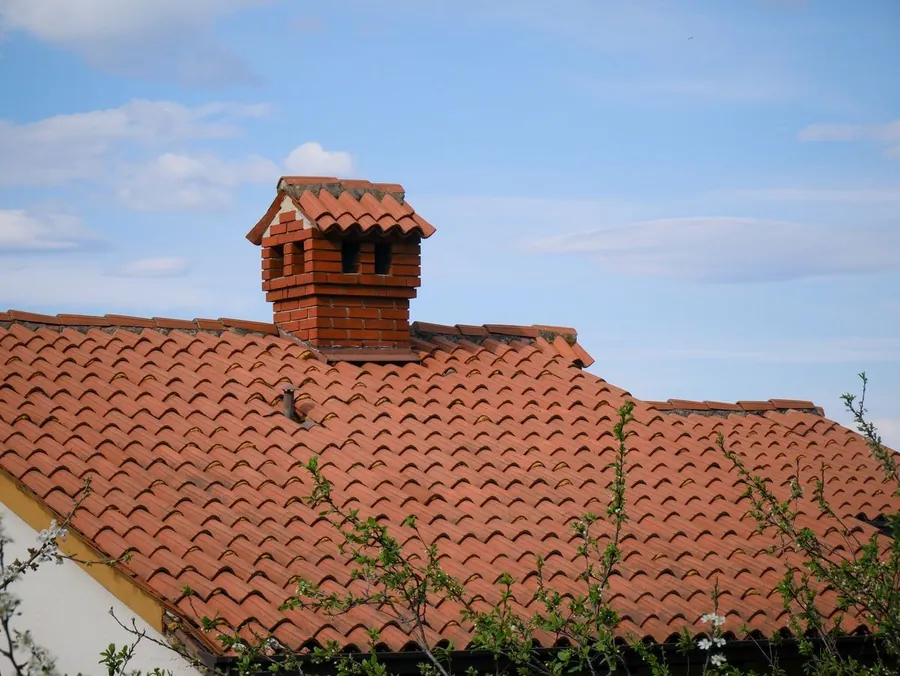
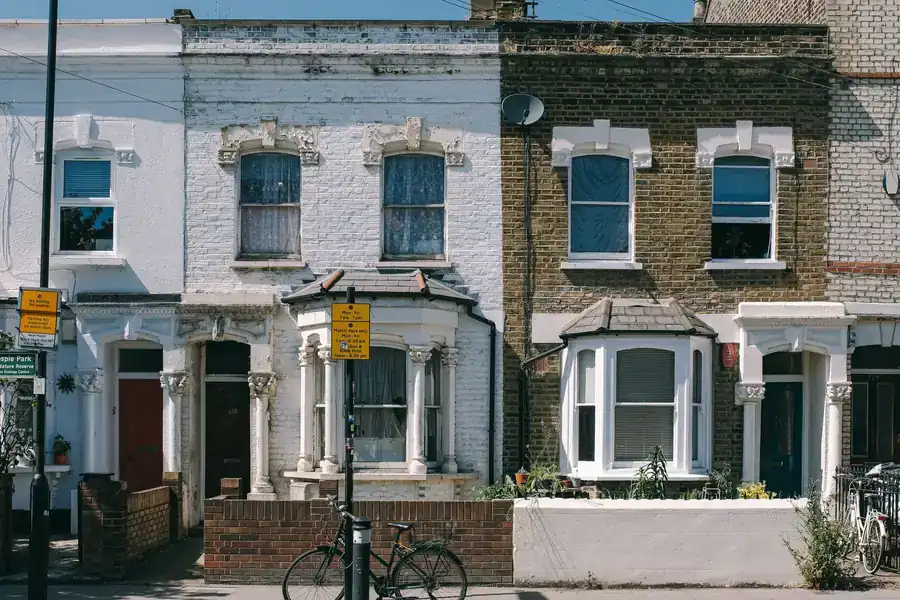
Croydon grew up under clay. The borough’s Victorian and Edwardian terraces went up while the brickfields and tileworks of Surrey, Kent and the Sussex weald were the natural supply for anyone building south of the Thames, and the small flat clay tile - the plain tile - was the regional default in a way that Welsh slate never quite was down here. Walk from West Croydon up through Thornton Heath, or along the older streets off Addiscombe Road, and a good share of what you are looking at is still the original covering: tiles laid somewhere between roughly 1870 and 1914, now well past a hundred years old. A plain tile roof carries about 60 tiles to the square metre, so an average terrace slope is holding a couple of thousand of them. Which of them are still doing their job, which are past saving, and what each option actually costs is what the rest of this covers.
Why so much of old Croydon sits under small clay tiles
The railway made Croydon, and the tile works supplied it. From the 1840s onwards the town filled in around its stations, and the builders putting up those streets bought whatever arrived cheapest by rail and canal. In the south east that meant clay: handmade sand-faced tiles from the weald in the earlier decades, then increasingly machine-pressed tiles as the Victorian brick and tile industry mechanised through the 1880s and 90s. Slate came down from Wales in huge quantities too, and plenty of Croydon roofs got it, but clay never lost its footing here the way it did in the north.
That regional habit is why the roofscape around South Croydon, Selhurst and the older parts of Norbury looks the way it does - warm, slightly uneven, mottled rather than uniform. It is also why the wrong repair stands out so badly on these streets.
If you are trying to work out whether a roof of this age needs patching or a proper overhaul, the covering is only half the question. Our page on roof replacement in Croydon sets out how that decision tends to get made, and the short version is that the tiles are rarely what settles it.
Clay or concrete? Telling them apart from the pavement and in the hand
From the street, size is the giveaway. A clay plain tile is small, roughly the footprint of a paperback, flat, and laid in tight overlapping courses with nothing but a joint line between neighbours. Concrete tiles of the sort that went on to millions of postwar houses are far larger and carry a deep interlocking channel down one side, which throws a shadow line every few hundred millimetres. If you can see strong vertical shadows marching across the slope, it is almost certainly concrete. If the surface reads as fine and busy, like brickwork seen from a distance, it is plain tile.
Up close the differences are blunter. Clay is the same colour through its whole thickness, because the colour is the fired clay itself. Concrete has a thin pigmented skin over a grey sandy body, and once that skin erodes the tile goes patchy grey. Tap a clay tile with a knuckle and it rings; concrete thuds. A handmade tile also has a faint camber in both directions, a deliberate bow that lifts the tail slightly and keeps the tiles from lying dead flat on each other, and you can feel it by running a hand down the slope.
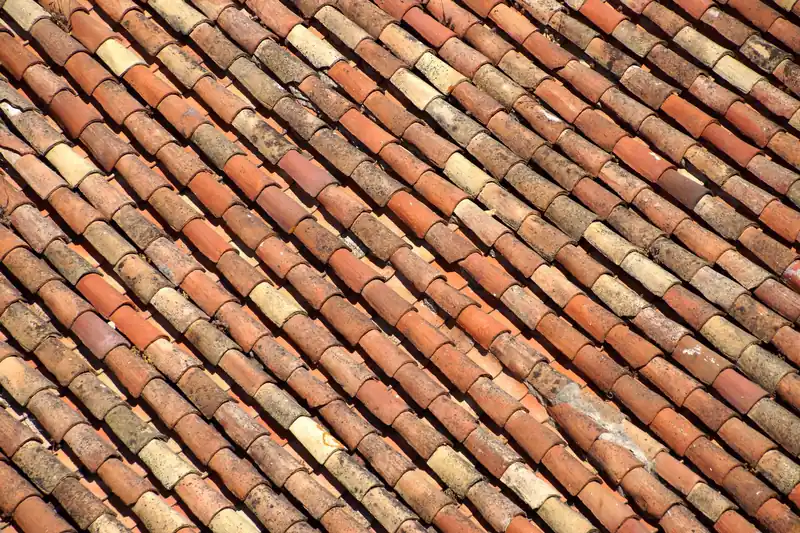
Colour variation is the last tell. A genuine old clay roof is never one flat shade. Kiln position, clay seam and a century of weather give you a slope that shifts from orange to brown to almost purple across a few metres. Anything perfectly even is either concrete or very new.
How a plain tile actually fails: lamination, frost and lost nibs
Clay tiles do not wear out the way a felt roof wears out. They fail in three fairly specific ways, and each one looks different.
Lamination is the common one. Clay is pressed and fired in layers, and if water finds its way along those layers it sits there through the winter and freezes. Ice expands, the layers separate, and the tile starts shedding leaves off its face like a badly bound book. You see it as flaking, thin curls of clay on the surface, and eventually a tile that has lost a third of its thickness. Frost spalling is the same enemy with a different result: instead of peeling, chunks break out of the exposed tail, mostly on the lower courses that stay wettest.
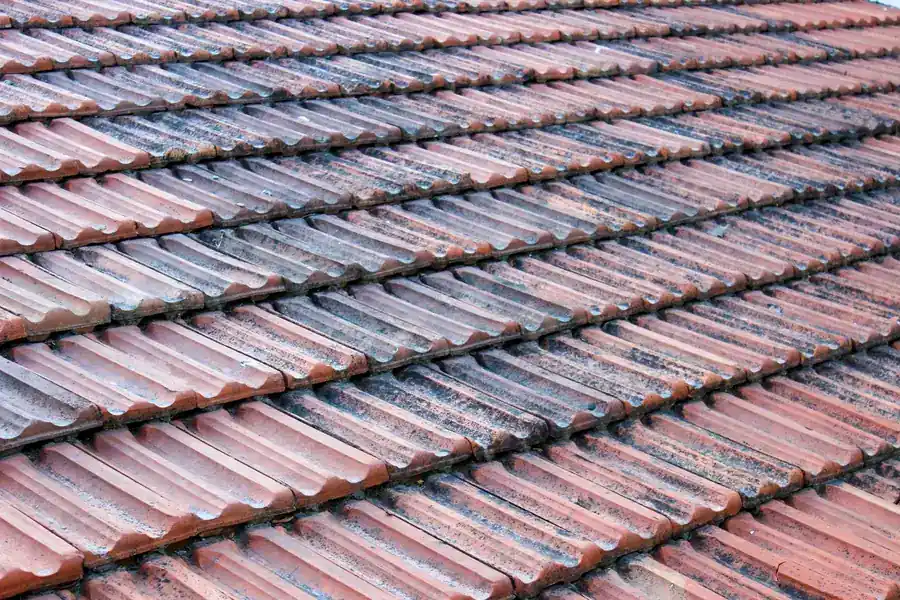
The third failure is the sneakiest, and the one that matters most. Along the top edge of every plain tile are two small lugs, the nibs, and they are what hooks the tile over its batten. Snap the nibs off and the tile is no longer hanging on anything. On a Victorian roof, where typically only every fourth or fifth course was nailed and the rest simply hung, a slope full of nib-less tiles is being held in place mainly by its own weight and the friction of its neighbours. That roof can look perfect in still weather and shed a dozen tiles in a single gale.
The layer you cannot see: battens, nails and pitch
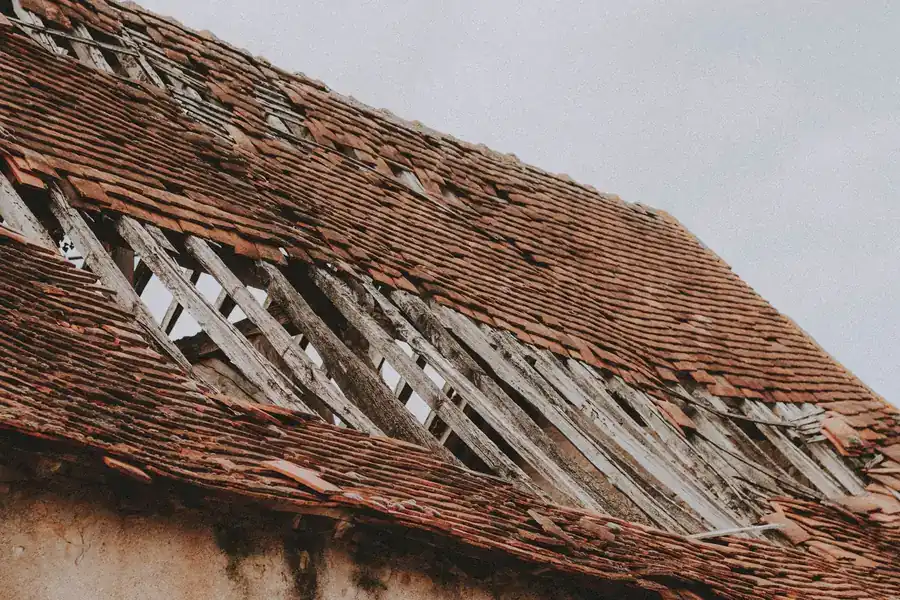
Here is the thing most owners of a period Croydon house get wrong. When a hundred-year-old tiled roof fails, the tiles are hardly ever the culprit. Fired clay is a remarkably durable material, and a well-made Victorian tile can last two hundred years. What gives out first is everything holding it up.
Nail sickness is the shorthand. The iron nails used on the fixed courses corrode, and the sawn softwood battens behind them rot where the damp sits against the metal. On roofs of this era there is generally no underlay at all, because bituminous sarking felt did not become normal practice until the 1930s, so wind-blown rain and snow have been landing on those battens directly for the whole life of the roof. When a roofer strips a slope and the battens come away in lengths you can break over a knee, that is the actual condition of the roof, whatever the tiles look like.
Pitch is the other hidden variable, and it is the one a previous owner may have ruined without meaning to. Plain tiles rely entirely on overlap to keep water out, so they need a reasonably steep slope - 35 degrees is the usual minimum and most roofers prefer 40 and above. Drop below that and wind pushes rain up between the tiles faster than gravity takes it down. Rear additions, lean-to kitchens and the reworked slopes that came with 1980s loft conversions are where you find plain tiles laid at 25 or 30 degrees, and those are the slopes that leak in every south-westerly. Fixing details matter too: ridge and hip tiles on these roofs were traditionally bedded in mortar alone, and the Roof Tile Association’s material specifications now reflect the British Standard requirement that they be mechanically fixed as well. A ridge held on by mortar only is a ridge on borrowed time.
Salvaged, handmade or machine-made: what each one gives you
Replacement tiles come from one of three places, and they trade cost against appearance in opposite directions.
Reclaimed Victorian tiles are the best visual match by a distance, because they are the same thing already weathered. Expect somewhere around 80p to £2 a tile depending on colour and pattern, and expect the yard to be straight with you that what you are buying is someone else’s stripped roof. That means sorting: a proportion will be laminating already, and a careful roofer will reject tiles by tapping them rather than trusting the pallet. Buy 15 to 20 per cent more than the calculation says you need.
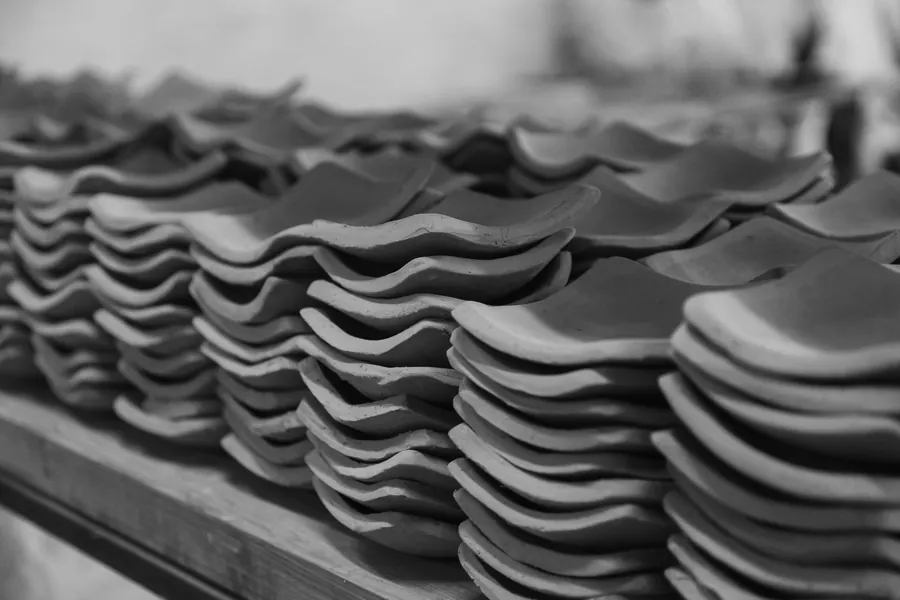
New handmade tiles are the premium option, typically £1.20 to £2.50 each. They are still pressed by hand into sanded moulds, so they carry the irregularity and camber of the originals and they weather in convincingly. On a conservation area frontage or a listed building this is often the only specification that will get signed off. New machine-made tiles are the cheap end, roughly 55p to £1, and a sand-faced machine-made tile is a reasonable middle ground - not as lively as the handmade version, but far better than a flat, uniform, modern-looking tile.
The sums shift once you add labour. Salvaged tiles save on materials and spend it on time, since stripping, sorting and re-hanging is slow work. New tiles cost more up front and go on faster. On a small patch, salvage wins nearly every time. On a whole roof it is closer than most people expect.
Why a patch in the wrong tile shows forever
This is the part people underestimate. A new clay tile dropped into a hundred-year-old slope does not blend in a season or two. It takes fifteen years or more for a modern tile to pick up the lichen, the darkening and the surface softening that surrounds it, and in the meantime you have a bright rectangle sitting in the middle of a mottled roof, visible from the pavement and visible in every photograph when you come to sell.
The fix is old and simple: rob the front, patch the back. A good roofer takes matching tiles from a rear or side slope that nobody sees, uses those for the repair on the visible elevation, and hangs the new tiles in the gap they came from. The front stays coherent, the new material weathers in unwatched, and the roof looks untouched. It costs a little more in labour and it is worth every penny on a terrace where the whole row shares one continuous roofline.
The same logic runs the other way on newer stock. We covered how this plays out on the borough’s postwar concrete tile roofs where the matching problem is about discontinued profiles rather than weathering, and the answer there is the same: hide the mismatch where nobody looks.
Croydon’s conservation areas, where the covering is not entirely yours
Croydon has a long list of conservation areas, and a fair number of them cover exactly the housing stock this article is about - The Waldrons, Chatsworth Road, Croham Manor Road, Upper Woodcote Village and the Webb Estate among them. Conservation area status does not stop you maintaining your roof. Repairing damage with matching tiles is ordinary upkeep and needs no application.
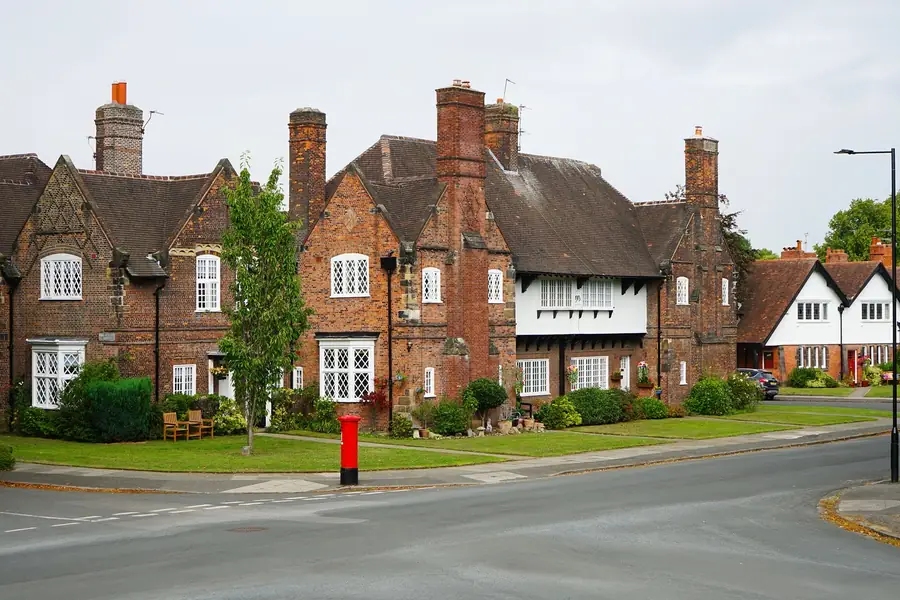
What changes is your freedom to alter the material. Re-covering a clay roof in concrete, or swapping a sand-faced tile for a smooth modern one, is a change of appearance, and in a conservation area that is a planning matter rather than a personal preference. Several Croydon areas also carry Article 4 directions, which strip out permitted development rights that would otherwise let you get on with it. The council’s own conservation areas pages list the designations and their appraisal documents, and the Planning Portal guidance on roof projects sets out where the permitted development line normally sits. Five minutes on both beats an enforcement letter after the job.
Where salvage stops being economic
At some point saving the original tiles becomes sentiment rather than sense, and a straight answer helps. Three things push a roof over that line.
Breakage comes first. Stripping a slope of brittle century-old tiles without cracking them is slow going, and on a roof that is already laminating you can lose a third of them before they reach the ground. Once the rejection rate runs past 30 to 35 per cent, you are buying most of the tiles anyway and paying someone to sort the rest as well. Then there are the battens. If the roof needs stripping to timber regardless, which on an unfelted Victorian roof with soft battens it nearly always does, the saving from reusing tiles shrinks to materials alone, because the expensive part of the job is happening either way. Access is the last one, and the least negotiable. Scaffolding a terraced house in Croydon is a fixed cost of roughly £900 to £2,000 before a single tile moves, and it does not care which option you pick. Which is also why going up twice, for a patch now and a recover in three years, is the most expensive plan on the table.
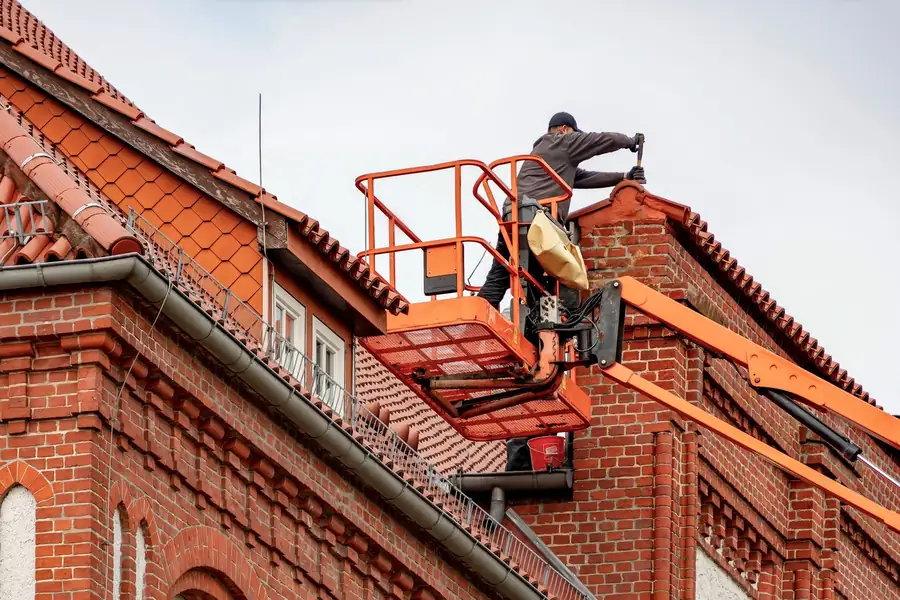
The realistic answer for most Croydon plain tile roofs sits somewhere in the middle. A slope with sound battens and scattered damage should be patched with salvaged tiles and left alone for another twenty years. A slope with rotten battens, no felt and widespread lamination wants stripping, re-battening, felting and re-laying, with as many original tiles going back on as survive the process. What you should not accept is a quote that skips the survey and assumes one or the other.
Frequently asked questions
What is a clay plain tile?
A small flat rectangle of fired clay, usually about 265mm by 165mm, with two lugs called nibs along the top edge that hook over a timber batten. It has no interlocking channel, so it keeps water out by overlapping - each course covers the two courses beneath it, which is why a plain tile roof carries roughly 60 tiles to every square metre.
Can you buy clay plain tiles to match a Victorian roof?
Usually, yes, though matching is a question of degree rather than a yes or no. Reclamation yards across Surrey and Kent hold sand-faced Victorian plain tiles, and several manufacturers still make handmade and machine-made versions in period colours. A salvaged tile of the right age and clay will sit almost invisibly. A brand new tile will be obviously new for the first fifteen or twenty years, whatever the brochure says.
What pitch do clay plain tiles need?
Thirty-five degrees is the usual minimum for a plain tile, and most roofers are happier at forty and above. It matters because a plain tile has nothing but overlap holding water out, so a shallow slope lets wind-driven rain track upwards between the tiles. Rear additions and lean-tos built at a lower angle than the main roof are where this shows up most often on Croydon houses.
Is my clay tile roof protected because I live in a conservation area?
Conservation area status does not stop you repairing a roof, and like-for-like replacement of damaged tiles is normally fine. What it can restrict is changing the covering to something different - swapping clay for concrete, for instance. Several Croydon conservation areas also carry Article 4 directions that remove permitted development rights, so the sensible order is to ring the council's planning team before the scaffold goes up, not after.
Is it cheaper to salvage old tiles or buy new ones?
Salvage saves on materials and spends the saving on labour. Stripping a roof carefully, sorting the sound tiles from the split ones and re-laying them takes considerably longer than tipping the lot in a skip and hanging new tiles. Once breakage and rejection climb past about a third of the roof, the sums usually tip towards new tiles, and the honest answer from a roofer should be a figure for both.
Free roof survey and a fixed written quote
Anywhere in Croydon and the surrounding CR postcodes. No call-out fee.